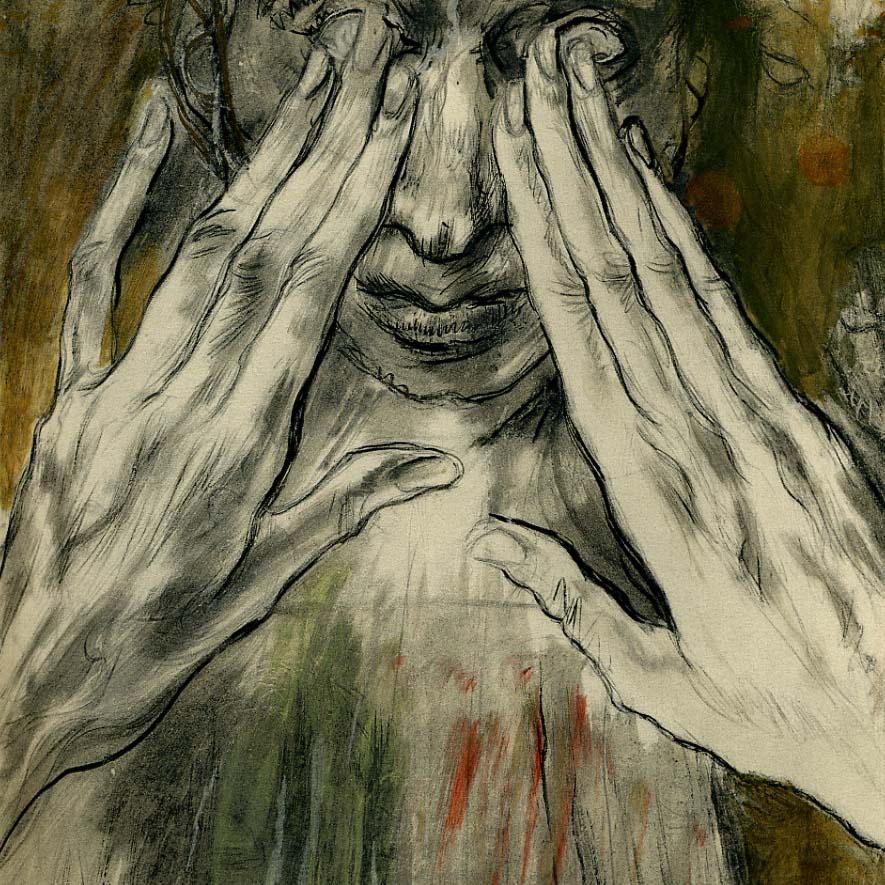
Sermon on Mark 4:35-41
Phalacrophobia: the irrational fear of becoming bald.
Gelotophobia: the irrational fear of being laughed at.
Ablutophobia: the irrational fear of bathing.
Perhaps you’ve seen lists of strange phobias like those. You might also be familiar with the
more common phobias: arachnophobia (spiders), acrophobia (heights), claustrophobia (enclosed
spaces). Fear – both rational and irrational – is a huge part of the human experience. We
struggle with it, come up with silly names for it, even make film after film after film about it.
Fear is an overpowering emotion, an emotion that takes hold of us and makes it hard for us to
think clearly, breathe deeply, and act rationally. Perhaps that is one of the reasons that in our
scripture, angels so often greet humans with the words “Fear not!”
Fear plays a big role in our Gospel text for today. Although our story today is not a parable – it
is a story about Jesus, not a story that Jesus told – it reminds me of my colleague’s words
from last week about parables: they are multi-layered, multi-dimensional stories, with many
possible meanings and layers of interpretation that can all be true at the same time. As I studied
today’s text, I started to see several layers to this story of the storm at sea, layers focused around
the fear of the disciples: what are they afraid of? I’d like to suggest to you three phobias, and
with them three interpretations, all of which might be true, although the last is my favorite.
The first phobia I would like to suggest to you is thalassophobia: the fear of the sea. The
beginning of our story finds Jesus and the disciples at the end of a long day of preaching and
teaching. The crowd is so eager to be near Jesus that he has gotten into a boat, sitting there and
teaching the crowd on land to prevent them from crushing him. The day is over, and Jesus calls
on the disciples to go with him across the sea of Galilee (which is actually a large-ish lake in the
northern part of Israel).
They set out in the boat, but a great windstorm arises – the words there actually mean “a great
whirlwind of wind.” The waves batter the boat so that the boat “is already being filled up,” the
Greek says. The story is mostly in the present tense, which isn’t unusual for Mark, but the
narrator adds immediacy with the word “already.” And through all of this, Jesus is asleep in the
back of the boat, with his head on a pillow, until the disciples wake him up in a total panic, with
these words: “Teacher, do you not care that we are perishing?”
The direct cause of their fear is the storm, but that fear is heightened by the way the sea was
perceived in their culture. For ancient Israelites, water was a place of swirling primordial chaos.
Think of the image of the Leviathan, the mysterious beast lurking in the depths of the sea, that
we hear of in the Psalms. Think of the formless void of waters that exists before God institutes
order, creating light and darkness, sea and dry land, in the Genesis account of creation. Think of the parting of the Red Sea, and the
parting of the Jordan River, God’s miraculous acts of pushing water back to make a path of safe
dry land so the Israelites can cross over. A storm is bad; a storm at sea is terrifying.
The most straight-forward interpretation of the disciples’ fear, then, is that they fear the storm at
sea, as we all fear storms in our lives, whether they are literal storms like the one that came
raging through the city on Friday, or metaphorical storms of financial trouble, or family crises, or
health issues. When we fear storms, perhaps this story can remind us that Christ has the power
to still storms, commanding “Peace! Be still!” to the storms of anxiety and hopelessness and fear
that rage in our hearts in times of trouble.
So that is one phobia, and one layer, but maybe you’ve noticed something: after the storm stops,
the disciples remain afraid; so I’d like to suggest a second possible layer of interpretation.
Perhaps the disciples are suffering from exousiphobia: the fear of power or authority, specifically
the authority that they come to realize Jesus has over the elements. Having been woken up in the
midst of the storm, Jesus rebukes the wind and says two words to the sea – words that are
translated in our Bible as “Peace! Be still!” but might be more aptly rendered as “Shut up! Shut
up!” The storm stops.
I very much doubt that that is what the disciples were expecting; perhaps they wanted him to
grab a bucket and start bailing, or to help with the oars. Maybe they were turning to him because
it was his stupid idea to get in this boat in the first place. I doubt that they realized that they were
in a boat with one who had the authority to control the weather. The Greek word used for storm
in this passage is “lailaps,” which can mean whirlwind; the Greek translation of Job uses that
same word when God speaks to Job out of the whirlwind, the passage we heard just a little while
ago. It is a passage that evokes the overwhelming power of God, reminding us that the all of the
vastness and mystery of the universe comes directly from God’s hand. It is one thing to be in a
boat in a storm at sea; it is another thing to be in a boat with one who has power to control the
storm. They think they’re in a boat with mild-mannered Bruce Banner, only to find themselves
with the Hulk. They start to realize the scope of Christ’s power, and they are frightened by what
they see.
Perhaps sometimes we, too, underestimate Christ’s power to redeem, transform, and save.
Commentator Mike Baughman invites us to consider whether, like the disciples, we sometimes
ask God only for things that seem realistic. Do we shy away from praying and hoping for real
peace and justice for this world? Do we sometimes ask for just a little bit of healing, just a
modicum of reconciliation? Do we hand Jesus a bucket instead of asking him to still the storm?
Perhaps we do, sometimes. But I think there is more going on here, and so I would like to
suggest a third phobia, a third interpretation. Perhaps the disciples are suffering from
epitychiphobia: the fear of success. You see, Jesus has actually proposed a pretty outrageous
plan; they have gotten into a boat in the Galilee, and Jesus has declared that the boat is heading
for the other side: the land of the Gerasenes. These are not particularly hated people, like the
Samaritans; they are not people who are really on the radar. They are Gentiles, and they are
Gentiles from way over there. Perhaps when the disciples see Jesus still the storm, they
suddenly realize the scope of what God was about to do; this is not some oddball itinerant
preacher heading off on a crazy quest. This is the Messiah, heading out to minister to Gentiles,
and they are going with him. It is a fundamental change in everything they thought they knew
about God and how God works in the world, and maybe that scares them.
They would not be the first; the text hints at another story of God reaching out to Gentiles,
another story of a storm at sea: the book of Jonah. Like Jonah, this story involves a word from
God, brought to non-Israelites by Israelites. Like Jonah, this story involves a man asleep in a
boat. Like Jonah, this story involves a storm at sea.
There is a more subtle connection, as well: when our translation says that the disciples were
“filled with great awe,” what the Greek actually says is that they “feared a great fear,” using both
the verb and noun forms of “phobia.” First of all, “filled with great awe” is not a very good
translation of that phrase. But second and more important, “fearing a fear” or “rejoicing a joy”
or “lamenting a lament” is weird syntax in Greek; it’s not how people talked. But it’s not
uncommon in Hebrew, and it is downright characteristic of the book of Jonah. If we know how
to listen for it, the narrator is evoking a story of a man reluctant to participate in the vastness of
God’s love. He references that story as he tells us this story of the boat bound for the land of the
Gerasenes, carrying the love of God incarnate and a dozen men who are just starting to realize
what they’ve signed up for.
So perhaps, when the disciples “fear a great fear,” their fear is the fear of success: they fear that
they are really, actually, going to go and bring the Good News to the Gerasenes. They fear that
the man they are following is truly the Christ, and the radical plan he has proposed is actually
going to happen, and they don’t know what that means for them. They don’t know what it
means for their lives or their families, they just know it will turn their worlds upside down -- and it will. They
fear the unknown that lies on the other side of transformation. The text tells us they are
frightened not when the storm comes, but when they find themselves in a boat riding over
calmed waters toward a foreign land with Jesus Christ.
Sometimes perhaps we feel that way as well. I think there are times when we are afraid of the
storms of life, but more afraid of the strange and uncomfortable places God might be asking us to
go when the storms subside. Change, after all, can be disorienting and terrifying. It can be more
frightening than the storms of rush and hurry, busy-ness and workaholism. More frightening
than the storms of our familiar anxieties and habitual neuroses. More frightening than the
dysfunctional way we’ve always done things, more frightening than the job that makes us
exhausted and bored, more frightening than the relationship that brings out the worst in us.
Change is certainly more frightening than the swirling storms of things that are urgent, but not
important.
So let me suggest a question for us as individuals, and for us as a community: what would we
be afraid of if the waves settled and the wind calmed? What land, what work, what mission is
there on the other side of the sea, far away from the familiar, that would cause us to fear a great
fear, a fear of transformation, a fear of God doing a new thing, a fear of success? Because
perhaps, friends, that is where God is leading us.
May we have the courage to follow. Amen.
Monday, June 25, 2012
Friday, June 15, 2012
Passing the Peace & Christ's Ministry of Physical Touch
Have you ever thought about the word “incarnation”? Our Christian tradition teaches that Jesus Christ was God incarnate, God coming to us in this world, in a body. The roots of the word “incarnation” highlight the sheer physicality of this miracle: the word “incarnation” comes from the Latin word caro, which means flesh. The word “incarnation” is related to the words “carnage” and “carne” (as in chili con carne – “with meat”!)
The word “incarnation” asserts that Jesus really, truly had a body, experiencing all of the joys and nitty-gritty realities that we know come with being embodied people. A workshop I attended recently at a conference for UCC clergy in their 20s and 30s highlighted one aspect of Jesus’ incarnation: his ministry of physical touch. We focused on the many stories of physical touch in the Gospel stories of Jesus’ life. Sometimes he touches people for healing: in one story he heals the eyes of a blind man by making mud out of dirt and saliva, and applying it to the man’s eyes! Other stories show Jesus communicating love through touch: stories of washing the disciples’ feet, or placing a child on his knee. A third kind of story shows Jesus being touched by others, such as the woman who anoints him in Bethany.
Many Christian worship services contain a moment where we celebrate the ministry of physical touch: we call it the Passing of the Peace. In my congregation, the passing of the peace is an extended affair; we make time for one another, smiling and greeting and rejoicing as we make our way up and down the aisles. It is a moment of joy in community, and it is our own way of celebrating the ministry of physical touch as we embrace, shake hands, pat shoulders, and sometimes even kiss cheeks.
Of course, harmful physical touch is widespread in our contemporary world, and the Gospels also tell negative stories of physical touch: Judas’ kiss is a gesture that communicates not love, but betrayal. As we pass the peace, it is important to remember that some people may not wish to be touched because of past experiences of harm. There is another story of a woman who touches the hem of Jesus’ garment for healing, and the scripture says he “feels the power go out of him.” For those who are shy or introverted, sometimes physical touch can be exhausting rather than invigorating. As we pass the peace, we can respect each other’s differences by paying attention to see who wishes to embrace, and who would prefer to shake hands.
One of Paul’s letters instructs the early Christians to “greet one another with a holy kiss” (Rom. 16:16). When we pass the peace with one another, we participate in this tradition of Christian love and community expressed incarnationally -- in the flesh. Furthermore, we celebrate that we are empowered to extend love and peace on Christ’s behalf, remembering that we are members of the Body of Christ!
The word “incarnation” asserts that Jesus really, truly had a body, experiencing all of the joys and nitty-gritty realities that we know come with being embodied people. A workshop I attended recently at a conference for UCC clergy in their 20s and 30s highlighted one aspect of Jesus’ incarnation: his ministry of physical touch. We focused on the many stories of physical touch in the Gospel stories of Jesus’ life. Sometimes he touches people for healing: in one story he heals the eyes of a blind man by making mud out of dirt and saliva, and applying it to the man’s eyes! Other stories show Jesus communicating love through touch: stories of washing the disciples’ feet, or placing a child on his knee. A third kind of story shows Jesus being touched by others, such as the woman who anoints him in Bethany.
Many Christian worship services contain a moment where we celebrate the ministry of physical touch: we call it the Passing of the Peace. In my congregation, the passing of the peace is an extended affair; we make time for one another, smiling and greeting and rejoicing as we make our way up and down the aisles. It is a moment of joy in community, and it is our own way of celebrating the ministry of physical touch as we embrace, shake hands, pat shoulders, and sometimes even kiss cheeks.
Of course, harmful physical touch is widespread in our contemporary world, and the Gospels also tell negative stories of physical touch: Judas’ kiss is a gesture that communicates not love, but betrayal. As we pass the peace, it is important to remember that some people may not wish to be touched because of past experiences of harm. There is another story of a woman who touches the hem of Jesus’ garment for healing, and the scripture says he “feels the power go out of him.” For those who are shy or introverted, sometimes physical touch can be exhausting rather than invigorating. As we pass the peace, we can respect each other’s differences by paying attention to see who wishes to embrace, and who would prefer to shake hands.
One of Paul’s letters instructs the early Christians to “greet one another with a holy kiss” (Rom. 16:16). When we pass the peace with one another, we participate in this tradition of Christian love and community expressed incarnationally -- in the flesh. Furthermore, we celebrate that we are empowered to extend love and peace on Christ’s behalf, remembering that we are members of the Body of Christ!
Wednesday, June 13, 2012
Confessions of a Biblically Illiterate Seminarian
This may sound strange
coming from a minister, but I
really never knew much
about the Bible growing up.
Sure, I went to Sunday
school every week, but we
spent a lot more time gluing
sequins to cardboard
crosses than we did delving
into scripture. I had a Bible
story book that told some of
the more child-friendly biblical
tales. (And also some
less child-friendly ones: I was
fascinated by the story of
Samson, whose eyes were
gouged out.) I memorized
the twenty-third psalm and
learned to sing the books of
the bible in order (I can still
do it), and in Sunday school
we would usually read a
verse or two. But I never
really got a handle on what
the different books of the Bible were, or where to find
the familiar parts, or what to
make of the rest. Wisdom
books, epistles, apocalypses…
it was all Greek to
me!
In my youth group experience, a talented lay leader helped us learn how to wrestle with biblical texts. Rather than having someone tell us what it said, we were encouraged to study and think and question and pray and explore, and scripture began to take on new meaning as I was given the opportunity to interpret it for myself.
In college, I learned a little more about the Bible in some of my religion courses; I started to learn about the historical context: the monarchy, the Babylonian exile, the Roman Empire. I learned how to find the Jordan River on a map, and I figured out that there’s not much snow in Bethlehem. In seminary, I finally (!) undertook the task of reading the whole thing, and I learned biblical Hebrew and Greek, as well as different interpretive methods. But none of that means much if it's just an irrelevant old book... I came, eventually, to see scripture as an ancient witness to the Living God. Interpreting together with congregants and seminarians, asking the question, "what does this mean for this community, right now?" was the key that finally unlocked the doors of scripture for me. I began to find joy in being part of a People of the Book.
I still don’t know everything about the Bible, but I love being part of a tradition that is gathered around the life of Jesus and the witness of scripture. I love turning the stories and poems and letters over and over, seeing them take on new meaning as I approach the texts from different standpoints in my life, using different methods, with different communities, reflecting on different events and issues in our contemporary world. One of the founders of congregationalism, John Robinson, told the passengers of the Mayflower that there is always “yet more light and truth to break forth from God’s word." I guess a more contemporary take on that is the UCC slogan: "God is Still Speaking!"
God of Word and Wisdom, help us to hear your message for us today in the ancient words of scripture. Bless us with words of challenge, comfort, and promise. We ask this in the name of Christ, the Word made flesh. Amen.
In my youth group experience, a talented lay leader helped us learn how to wrestle with biblical texts. Rather than having someone tell us what it said, we were encouraged to study and think and question and pray and explore, and scripture began to take on new meaning as I was given the opportunity to interpret it for myself.
In college, I learned a little more about the Bible in some of my religion courses; I started to learn about the historical context: the monarchy, the Babylonian exile, the Roman Empire. I learned how to find the Jordan River on a map, and I figured out that there’s not much snow in Bethlehem. In seminary, I finally (!) undertook the task of reading the whole thing, and I learned biblical Hebrew and Greek, as well as different interpretive methods. But none of that means much if it's just an irrelevant old book... I came, eventually, to see scripture as an ancient witness to the Living God. Interpreting together with congregants and seminarians, asking the question, "what does this mean for this community, right now?" was the key that finally unlocked the doors of scripture for me. I began to find joy in being part of a People of the Book.
I still don’t know everything about the Bible, but I love being part of a tradition that is gathered around the life of Jesus and the witness of scripture. I love turning the stories and poems and letters over and over, seeing them take on new meaning as I approach the texts from different standpoints in my life, using different methods, with different communities, reflecting on different events and issues in our contemporary world. One of the founders of congregationalism, John Robinson, told the passengers of the Mayflower that there is always “yet more light and truth to break forth from God’s word." I guess a more contemporary take on that is the UCC slogan: "God is Still Speaking!"
God of Word and Wisdom, help us to hear your message for us today in the ancient words of scripture. Bless us with words of challenge, comfort, and promise. We ask this in the name of Christ, the Word made flesh. Amen.
Monday, May 7, 2012
Running the Race Set Before Her: Funeral Sermon for my Grandmother
My grandmother died last week, and the pastor of her church graciously invited me to preach at her funeral. This sermon may not be of interest to my regular blog readers, but I'm posting it here mostly because it's an easy way for my family and my grandmother's friends to access it.
On Wednesday, I joined some family members in Simsbury to be with my grandfather and start making arrangements for my grandmother’s funeral. In the midst of the shock and grief, we found ourselves recounting stories about my grandmother. My mom and my aunt both remembered something that my grandmother had said: that when she died, she wanted the “Theme from Rocky” playing – that instrumental piece that opens with victorious fanfares, and evokes the story of Sylvester Stallone becoming an unlikely boxing champion. They both remembered it, and I think they even mentioned it to Pastor Chung, which was probably a new one for him. With apologies to my grandmother, we’re not going to play the Theme from Rocky today. But I loved hearing this story because it told me that my grandmother thought of death as a victorious event, the culmination of a great feat of strength and skill.
The book of Hebrews speaks of some of the great heroes and everyday people of the Old Testament, men and women of faith who have died: Abel and Moses and Rahab and on and on. The author names all of these people, and then says this: “Therefore, since we are surrounded by so great a cloud of witnesses, let us also lay aside every weight and the sin that clings so closely, and let us run with perseverance the race that is set before us, looking to Jesus the pioneer and perfecter of our faith, who for the sake of the joy that was set before him endured the cross, disregarding its shame, and has taken his seat at the right hand of the throne of God.” This scripture imagines life as a race, a great athletic feat in which we are cheered on by those who have gone before us. Life as a race, which is sometimes exhilarating, and sometimes exhausting. Life as a race, a race which ends in triumph and glory.
My grandmother ran quite a race. Married fifty-five years, mother to five children and grandmother to thirteen grandchildren, she loved her family fiercely and with great affection. She thought of us as her team, and it was us against the world. When one of us was struggling, she was totally on our side, rooting for us, and booing the other team, whether it was an employer or an ex-boyfriend, diabetes or the Red Sox. When one of us was winning, she was proud, but not surprised. We were her team, after all… and she was sure we were the best team.
She valued learning, and she worked to keep expanding her mind throughout her whole life. She read avidly; she once shared with me a list of the hundred greatest books of the century, with little check marks beside each one she had read, and she planned to read them all. When she became a senior citizen, she qualified to take courses at the University of Hartford; she took a series of courses in classical music and aced every test. Some people take up bridge in their retirement; my grandmother not only took up bridge, but took bridge lessons. She loved learning about her faith: she came to visit me at seminary in 2008; we talked about the year-long Bible study course she was taking at this very church, and when she visited my New Testament class, I was struck by her detailed note-taking and thoughtful questions.
She had a generous heart, and she loved to give people things she had made. ¬Once, it was braided rugs which she made with my grandfather. More recently, she would knit prayer shawls for this church’s prayer shawl ministry. Our homes are full of things she made for us, from the prayer shawl she knit me when I was in seminary to the Christmas stocking she made my cousin when he was a baby. And then there was her baking: pecan pies and Russian tea cakes, homemade cookies and English muffin bread. She knew that gathering at the dinner table nourished not only healthy bodies, but healthy souls and healthy families, and many of the fond memories that we’ve shared in the last few days have been memories of things that happened at the dinner table.
The dinner table, appropriately enough, is one of the images that scripture and tradition offer to us to help us envision what God has waiting for us on the other side of death. But it is not the only image. Scripture offers us images of a place where there is singing and rejoicing, a place where there is healing and wholeness and the end of pain, a place where God’s will is done. Jesus speaks of his Father’s house, where he has gone to prepare a place for us. We speak of death as crossing a river, entering the holy city, going home. In Jesus Christ’s crucifixion and resurrection, we hear a resounding promise that death does not have the final word: as Saint Paul writes, death has been swallowed up in victory.
We have a lot of different images for the world to come, and I suspect that there is something true enough about all of them, and that what lies on the other side of death is beyond anything we can quite capture in words or grasp with human minds. Those shimmering, ephemeral images can seem awfully insubstantial as waves of grief wash over us. We want something solid to grasp: we want to know where she is, and exactly what it is like, and whether she can see us. It is desperately hard to say goodbye, and harder still to rest in the assurance of things not seen. But for my grandmother, who has run her race and taken her place in the great cloud of witnesses, those questions have been answered.
Today we’re gathered in grief, to remember the time we had with her and say goodbye; today we hunker down in our own sorrow about having to live without her, looking to God and to each other for comfort and consolation. My family knows that I cry easily and frequently, which always bothered my grandmother… whenever anyone started to tear up, she would say, “Oh, honey, don’t cry. Don't cry, honey.” That never stopped me, and it is not stopping us today. Today we gather with our sorrow and our loneliness, to hear words of comfort like the 23rd Psalm, and songs of consolation like “There is a Balm in Gilead.” But when the waves of grief subside, I hope we’ll remember that, for Grandma, it’s the Theme from Rocky all the way.
On Wednesday, I joined some family members in Simsbury to be with my grandfather and start making arrangements for my grandmother’s funeral. In the midst of the shock and grief, we found ourselves recounting stories about my grandmother. My mom and my aunt both remembered something that my grandmother had said: that when she died, she wanted the “Theme from Rocky” playing – that instrumental piece that opens with victorious fanfares, and evokes the story of Sylvester Stallone becoming an unlikely boxing champion. They both remembered it, and I think they even mentioned it to Pastor Chung, which was probably a new one for him. With apologies to my grandmother, we’re not going to play the Theme from Rocky today. But I loved hearing this story because it told me that my grandmother thought of death as a victorious event, the culmination of a great feat of strength and skill.
The book of Hebrews speaks of some of the great heroes and everyday people of the Old Testament, men and women of faith who have died: Abel and Moses and Rahab and on and on. The author names all of these people, and then says this: “Therefore, since we are surrounded by so great a cloud of witnesses, let us also lay aside every weight and the sin that clings so closely, and let us run with perseverance the race that is set before us, looking to Jesus the pioneer and perfecter of our faith, who for the sake of the joy that was set before him endured the cross, disregarding its shame, and has taken his seat at the right hand of the throne of God.” This scripture imagines life as a race, a great athletic feat in which we are cheered on by those who have gone before us. Life as a race, which is sometimes exhilarating, and sometimes exhausting. Life as a race, a race which ends in triumph and glory.
My grandmother ran quite a race. Married fifty-five years, mother to five children and grandmother to thirteen grandchildren, she loved her family fiercely and with great affection. She thought of us as her team, and it was us against the world. When one of us was struggling, she was totally on our side, rooting for us, and booing the other team, whether it was an employer or an ex-boyfriend, diabetes or the Red Sox. When one of us was winning, she was proud, but not surprised. We were her team, after all… and she was sure we were the best team.
She valued learning, and she worked to keep expanding her mind throughout her whole life. She read avidly; she once shared with me a list of the hundred greatest books of the century, with little check marks beside each one she had read, and she planned to read them all. When she became a senior citizen, she qualified to take courses at the University of Hartford; she took a series of courses in classical music and aced every test. Some people take up bridge in their retirement; my grandmother not only took up bridge, but took bridge lessons. She loved learning about her faith: she came to visit me at seminary in 2008; we talked about the year-long Bible study course she was taking at this very church, and when she visited my New Testament class, I was struck by her detailed note-taking and thoughtful questions.
She had a generous heart, and she loved to give people things she had made. ¬Once, it was braided rugs which she made with my grandfather. More recently, she would knit prayer shawls for this church’s prayer shawl ministry. Our homes are full of things she made for us, from the prayer shawl she knit me when I was in seminary to the Christmas stocking she made my cousin when he was a baby. And then there was her baking: pecan pies and Russian tea cakes, homemade cookies and English muffin bread. She knew that gathering at the dinner table nourished not only healthy bodies, but healthy souls and healthy families, and many of the fond memories that we’ve shared in the last few days have been memories of things that happened at the dinner table.
The dinner table, appropriately enough, is one of the images that scripture and tradition offer to us to help us envision what God has waiting for us on the other side of death. But it is not the only image. Scripture offers us images of a place where there is singing and rejoicing, a place where there is healing and wholeness and the end of pain, a place where God’s will is done. Jesus speaks of his Father’s house, where he has gone to prepare a place for us. We speak of death as crossing a river, entering the holy city, going home. In Jesus Christ’s crucifixion and resurrection, we hear a resounding promise that death does not have the final word: as Saint Paul writes, death has been swallowed up in victory.
We have a lot of different images for the world to come, and I suspect that there is something true enough about all of them, and that what lies on the other side of death is beyond anything we can quite capture in words or grasp with human minds. Those shimmering, ephemeral images can seem awfully insubstantial as waves of grief wash over us. We want something solid to grasp: we want to know where she is, and exactly what it is like, and whether she can see us. It is desperately hard to say goodbye, and harder still to rest in the assurance of things not seen. But for my grandmother, who has run her race and taken her place in the great cloud of witnesses, those questions have been answered.
Today we’re gathered in grief, to remember the time we had with her and say goodbye; today we hunker down in our own sorrow about having to live without her, looking to God and to each other for comfort and consolation. My family knows that I cry easily and frequently, which always bothered my grandmother… whenever anyone started to tear up, she would say, “Oh, honey, don’t cry. Don't cry, honey.” That never stopped me, and it is not stopping us today. Today we gather with our sorrow and our loneliness, to hear words of comfort like the 23rd Psalm, and songs of consolation like “There is a Balm in Gilead.” But when the waves of grief subside, I hope we’ll remember that, for Grandma, it’s the Theme from Rocky all the way.
Sunday, April 29, 2012
Good Mrs. Murphy
A Sermon on Psalm 23
Last summer I went to the doctor for a physical, and found out that they needed to draw blood for some routine tests. I hate needles and I hate blood and I hate having blood drawn. In fact, just thinking about the whole thing right now is making me a little queasy. But there was no choice, so I went into the lab, and I did what I always do: I rolled up my sleeve, I looked away, and I began to recite the twenty-third Psalm to myself. “The Lord is my shepherd.” Breathe in. “I shall not want.” Breathe out. It calms me down, and it passes the time. Usually they’re putting on the band-aid before I get to “Surely goodness and mercy shall follow me all the days of my life.”
So they filled up their two little tubes of blood, and before I could say “your rod and your staff they comfort me,” they sent me on my way.
A week or so later, I got a call saying that one of the test results was a little unusual, and I needed to go get a work-up from a hematologist. (Don’t worry, by the way, everything turned out fine.) So off I go to the hematologist, roll up my sleeve, look away, breathe in, breathe out, recite the twenty-third Psalm. On I go through the green pastures and still waters, the rod and the staff, the cup that runneth over. I reach the word “amen,” and… no band-aid! So I take a deep breath and look over at my left arm, and to my great shock and horror, the technician has fourteen little vials to fill, and she has finished half of them. So I started over from the beginning.
All this is to say that for many of us who grew up in church – and some of us who did not – the 23rd Psalm is written on the tablets of our hearts. Memorized in Sunday school or learned through osmosis, it has become a dear old friend. Perhaps we say it in times of stress and anxiety, or as a prayer of thanksgiving, or when we need a moment of peace and tranquility. We recite it in funerals. We remember it when we sit in hospital waiting rooms. It passes the time while I get blood drawn. And once every three years, our liturgical calendar brings us to Good Shepherd Sunday, when we pair the 23rd Psalm with Jesus’ words from John: “I am the good shepherd. The good shepherd lays down his life for the sheep.”
Our Bible is full of shepherding images, which is not surprising given the culture it comes from – in an agrarian society, there were plenty of shepherds. Texts about shepherds like the twenty-third Psalm, Jesus’ teaching about the Good Shepherd in the Gospel of John, and the parable of the shepherd leaving the ninety-nine sheep in the Gospel of Luke, invoked an image that would have been very familiar to their original listeners, who would likely have seen shepherds on a regular basis. There are plenty of non-metaphorical shepherds in the Bible as well, from King David to the shepherds who visit the Christ-child.
But we live in a different sort of world, and shepherds are nowhere near as common now as they were then. Most of us have not seen a shepherd this week, and some of us may not have ever seen a shepherd in our lives, which makes me ask, what is it about this image of God as our Shepherd, or Jesus as the Good Shepherd, which continues to appeal to us?
There is probably more than one reason. It may have something to do with images of the presence of God in the midst of difficult situations: Just as the shepherd stays with the sheep in the dark hours and the dangerous places, God stays with us in the valley of the shadow of death. Perhaps it has to do with the shepherd as an image of power which is loving and tender; in contrast with images of dangerous power, this is a God whose power is used to guide, nurture, and protect.
But commentator Russell Rathbun raises questions about whether this image might also appeal to a more selfish side of us. He writes, “This psalm is so weirdly narcissistic. “The Lord is my shepherd.” Why not, the Lord is our shepherd?” He continues, “I have this crazy image of a Sunday school filmstrip that plays every time I read this psalm. The Lord is walking beside a little blonde haired kid with short pants and a cap. Then he gestures to the green grass and the kid lays down on it for a nap. The kid gets up and the shepherd takes him down by the still waters, he has his rod and his staff to protect the kid. . . . The image of this personal Lord following an individual around, attending to their needs—a place to sleep, food, water, protection—seems more like a dog than God. More like a servant than a shepherd.”
Could it be that perhaps some of the appeal of the shepherd metaphor comes from the image of a God whose primary goal is to fulfill our every wish, to make us as comfortable as possible with green pastures and still waters?
The Reverend Paul Sundberg, in response to this uncomfortable question, wrote a humorous adaptation of Psalm 23, which begins:
The Lord is my personal-shopper; I will have many fashionable choices
He makes me lie down on high thread count Egyptian cotton; he brings me still water not sparkling
He restores my credit scores. He turns traffic lights green to prove he’s with me.
Even though my commute is horrible, I don’t fear texting drivers; for you are with me;
your management of traffic lights and parking spaces – they comfort me.
Hopefully none of us have quite such a narcissistic theology as the one Reverend Sundberg spoofs here, but I think he does call me out on some of my own selfishness and self-centeredness. God is, of course, present with us and available to us in moments of joy and sorrow, stress and peace, whether those moments are big or small; God is present with me when I get blood drawn. But Reverend Sundberg’s Psalm calls on us to put our own needs in perspective, to know that God is bigger and wider than that.
A pastor I know told a story from his own childhood, of hearing this Psalm recited in church, and misunderstanding the words. At the end of the Psalm, what he thought he heard was this: “Surely good Mrs. Murphy shall follow me all the days of my life.” The words there, of course, are “goodness and mercy,” but he heard “Good Mrs. Murphy.” And although those are not the words in scripture, I think they certainly do suggest a wonderful way of understanding God. What he pictured was a kindly older Irish woman – I envision my own great-great-great-grandmother, whose name was Margaret Murphy. She was a seamstress, and had nine children. In the words “Surely Good Mrs. Murphy,” I see an image of no-nonsense maternal love, of love marked, for a seamstress in the late nineteenth century, by aching hands and tired eyes. I see an image of a love which is constantly present in our times of need, and a love which cares about us too much to let us take our own micro-crises too seriously. When I start wincing about having blood drawn, good Mrs. Murphy rolls her eyes. This is an image of a God who is present with us but does not cater to us, a God who loves us enough to challenge us, and trusts us enough to rely on us.
What I think we sometimes forget, when we hear this metaphor of God as shepherd, is that a sheep is not a pet. There are similarities between contemporary pet-ownership and ancient shepherding: both relationships are marked by love and care. In the Gospel lesson today, Jesus says, “I know my own, and they know me,” alluding to the fact that sheep learn to recognize the voice of their own shepherd, and shepherds learn the different appearances, personalities, and bleats of the members of their own flock. Shepherds did and do put themselves in physical danger to protect their flock. Shepherds did and do go to great lengths to meet the flock’s need for food, water, rest, and safety. The shepherd does provide for the sheep’s needs, the relationship is one of love and care.
But the sheep are more than pets; they have a role beyond being waited on by the shepherd. Sheep were common in the ancient world, and it’s not because they were fluffy: it’s because they were necessary. The flock would have been a vital source of the shepherd’s livelihood, and they were relied on to meet the basic needs of the people in the region. They produced wool and milk, as well as providing meat. They were, in fact, essential to the well-being of the wider community, which relied on the goods that came from the flocks the shepherds tended. The flock was necessary to feed hungry bellies, to provide clothing to keep people warm.
And so when we picture God as our shepherd, we need to remember that that image has more than one side. If God is our shepherd, then God does indeed care for us, love us, walk beside us in times of difficulty, meet our needs. But if God is our shepherd, then God also has work for us to do: like the shepherd’s sheep, we are asked to give of ourselves to care for God’s children and God’s world. When we say “The Lord is my shepherd,” we acknowledge our deep reliance on God’s grace to meet our every need. But we also remember that God has entrusted us with the work of caring for our neighbors. We do that in a very different way than sheep do: we do it by giving of time and talent and treasure, rather than of wool or milk or meat. We do it by feeding people who are hungry, sitting with people who are lonely, caring for people who are sick. We do it by working for justice and peace in this world. And in all of this, we are called to remember that God, our shepherd, is at work within and beside and around us. God is at work in this world and in our lives, nurturing us and caring for us, loving us beyond measure. The God who makes us lie down in green pastures and leads us beside still waters, who walks with us through the valley of the shadow of death, nurtures and strengthens us so that we may do the work that has been entrusted to us. Thanks be to God. Amen.
Monday, April 2, 2012
The World Is Watching
“The world is watching.” That’s the slogan of the blockbuster movie The Hunger Games. Based on an excellent trilogy of young adult novels, The Hunger Games imagines a post-apocalyptic North America, in which an opulent city called The Capitol controls twelve districts. The districts produce all the goods to supply the Capitol’s needs, from agriculture to technology to energy. The Capitol devours all of those goods in their consumer culture of ever-changing high fashion, posh homes, and lavish parties. The people in the districts are desperately poor, sometimes to the point of starvation; they are kept in line with the constant threat of military force and with the display of power that is the annual Hunger Games. In this event, two children are randomly selected from each district, and the twenty-four children are put into a massive wilderness arena full of hidden cameras to fight the elements and one another in a televised competition, until twenty-three are dead and one is victorious.
At first, the premise sounds like simply a fanciful excuse for gratuitous violence, a fiendishly bizarre fantasy about a perversely violent world. But as I read the books, I realized there was a lot more going on. After all, we live in a world where children die every day. In my congregation, every week, we read the names of the American soldiers who died in Iraq and Afghanistan – many of them not much older than the hunger games competitors – and we remember along with them the Iraqi and Afghan people, whose names we do not know, young and old, military and civilian, who have died because of those wars.
One of the inspirations for The Hunger Games series, according to its author Suzanne Collins, was the juxtaposition of coverage of the Iraq war and reality television. Collins says that as she flipped back and forth from reality T.V. to the actual reality of the news, it registered in a whole new way how popular culture desensitizes us to the real violence and suffering of the world. Reality television shows often appeal to our basest voyeuristic instincts (and I am chief among sinners, on this topic); we watch with judgment or horror or schadenfreude, appalled at Snooki’s latest exploits, or the shameless behavior of the contestants on The Bachelor, or the filth-encrusted, pest-infested homes on Hoarders. The entertainment value of reality television often comes from watching the emotionally painful experiences of others. But when that is what we do to entertain ourselves, our capacity to empathize with suffering halfway around the world is often dulled. Out of that observation came the horrifying premise of the first novel of the series. So certainly, The Hunger Games has some cultural commentary for a world like ours.
But there are also resonances between the world of The Hunger Games and the world of Jesus, resonances that are especially strong today, as we celebrate Palm Sunday and remember the story of Jesus’ triumphal entry into Jerusalem.
In the book The Last Week, Marcus Borg and John Dominic Crossan note that in the days leading up to the Jewish festival of Passover, there would likely have been another procession into Jerusalem: the procession of Roman imperial officials into the city to keep the peace and prevent uprisings. Borg and Crossan write: “[I]t was the standard practice of the Roman governors of Judea to be in Jerusalem for the major Jewish festivals. They did so not out of empathetic reverence for the religious devotion of their Jewish subjects, but to be in the city in case there was trouble. There often was, especially at Passover, a festival that celebrated the Jewish people’s liberation from an earlier empire.”
“Imagine the imperial procession’s arrival in the city,” Borg and Crossan continue, “A visual panoply of imperial power: cavalry on horses, foot soldiers, leather armor, helmets, weapons, banners, golden eagles mounted on poles, sun glinting on metal and gold. Sounds: the marching of feet, the creaking of leather, the clinking of bridles, the beating of drums. The swirling of dust. The eyes of the silent onlookers, some curious, some awed, some resentful.”
This is the context into which Jesus rides in today’s Gospel story. It’s a wonderful coincidence this year that Palm Sunday falls on April Fool’s Day, because there is an element of satire in Jesus’ parade into Jerusalem. Just imagine the contrast between the imperial parade on one hand, with its displays of power and status and veiled threat of violence, and this parade on the other hand.
No weapons, no armor, no displays of wealth. Jesus rides into Jerusalem on a young colt – as a victorious king would if he were bringing an offer of peace; as the prophet Zechariah says the Messiah will ride into Jerusalem. Jesus’ ride into Jerusalem on a colt is a declaration of his identity; it is also an outrageous claim of victory, a gesture that extends an olive branch as if he were the political equal of Jerusalem’s authorities. But that does not mean, riding on this colt, that he didn't look silly; it doesn't mean that his feet didn’t drag on the ground – they very well may have. And as Jesus rides in, an itinerant preacher from a rural backwater claiming the status of king, he is followed by a ragtag band of mostly poor folks, some of them very disreputable indeed: fishermen and tax collectors, beggars and women. Not much of a victory parade, to the eyes of most people at the time.
Jesus is even lampooning Roman imperial practices in the drawn-out story of sending his disciples to commandeer the colt. Did you hear what they were supposed to say to the colt’s owners? “The Lord has need of it.” In a conquered, colonized land, where it was not uncommon to have a Roman soldier or official demand your cloak, force you to walk a mile, or slap you across the face (as Jesus’ teachings imply, when he teaches the disciples to walk the second mile and turn the other cheek), in a land where every imperial subject was expected to be ready and willing to declare, “Caesar is Lord!”, Jesus sends his disciples to commandeer a colt with the words, “The Lord has need of it.” Any bystander would have assumed that the “lord” in question would have been a Roman official of some sort. The “Lord” needs an unbroken colt? For what?! He’ll send it back tonight? Sure, I bet.
It is an unusual sort of parade, and it declares that the ways of the kingdom of God are fundamentally different from the ways of the kingdoms of this world. Jesus’ procession into Jerusalem opposes the force of empire not with more force and violence, but with a cuttingly satirical, boldly subversive, foolishly peaceable vision. A vision of a Way where humility and compassion conquer violence and subjugation. A vision of a Way in which social barriers are broken down, and those people who are scorned, rejected and ignored by polite company are the very heart of the community. A vision of a savior who saves not through violent power and military might, but through compassion, grace, and mercy. This is not your typical parade.
But it does have one thing in common with the Roman imperial processions: it is a spectacle. And the crowd loves it. They gather on the roadsides, throwing down their cloaks, waving their palms, crying out “Hosanna! Hosanna!” – which means, “save us! Save us!” Their cries of praise and acclamation are both an act of participation in the Kingdom of God, and an act of rebellion against the ways of the Roman empire.
If you know to look for it, the power of the Roman empire resonates throughout The Hunger Games. The structure of the society – with desperately poor districts supporting the excesses of the Capitol under the threat of violence – is the same as Roman imperial society in Jesus’ day. Citizens of the Capitol have names like Portia, Octavia, Cato, Seneca, and Caesar. The games themselves are a riff on the Roman Games, where slaves and criminals fought to the death or were torn apart by wild animals for the amusement of the crowd. And most tellingly, the entire country is named “Panem,” a reference to the phrase “panem et circenses,” or “bread and circuses,” the Roman empire’s tools for keeping the populace from rebelling.
Like the world of The Hunger Games, and like the world of Jesus, our world, too, is full of the forces of empire. Forces that ignore, rationalize, and excuse the shooting of an unarmed child wearing a hoodie. Forces that use undocumented immigrants to do our society’s most-despised, lowest-paid work, and then lock these same immigrants up, and then claim that ensuring basic human rights in detention facilities, such as safety from assault and access to health care, would be too expensive. Forces that make a scandal out of Sandra Fluke alluding to having consensual premarital sex, when what we should be scandalized by is the epidemic rate of sexual violence in this nation and around the world. This isn’t The Hunger Games – there is no single villain pulling the strings, no calculated plot, but that does not make the violence of this world any less insidious, or any more acceptable.
And like the world of The Hunger Games, this broken world tries to encourage us to sit back and watch, to be passive spectators of the twenty-four hour news cycle, ignoring or observing the misery of the world, rather than changing it.
But today, on Palm Sunday, as we remember Jesus’ procession into Jerusalem, and the cheering spectators who so quickly turn against him, we are confronted with a question: are we going to be spectators, or are we going to be participants?
I won’t give away the end of The Hunger Games, but I will say that throughout the film, we see subversive gestures that challenge the imperial power of the Capitol. To me, one of the most powerful happens in the arena, when a beloved character dies, and the grief-struck protagonist takes the time to adorn the body of her friend with flowers, and say a final goodbye. It is a small gesture, turning aside for a moment from the violence of the arena and the demands of survival to honor the life of this person, to insist on their humanity, and to mourn their death. It is a small gesture, but often, small gestures are the best way we have to stand up to the powers of hate, oppression, and violence. Small gestures like visiting an undocumented person in a detention facility. Small gestures like wearing a hoodie in remembrance of Trayvon Martin. Small gestures like speaking up when we hear a joke based on sexism or racism or homophobia. Small gestures like gathering around a table where all are welcome and all share equally. Small gestures like choosing which parade we will show up for.
As Jesus rides into Jerusalem, the crowd surrounds him crying out “Hosanna! Hosanna!” “Save us! Save us!” They have caught a glimpse of a new way, the way of the kingdom of God. We know this story, friends. The crowd is about to turn; the powers of the empire are too frightening and the risk is too great, and it is too hard to believe that salvation lies in the ways of peace, justice, and compassion taught and lived by this man, riding unarmed on a colt into the trap that awaits. Time and again, throughout history and today, the crowd has turned, and will turn, from the ways of the kingdom of God back to the ways of the kingdoms of this world. But the good news is that those small gestures, those gestures that reject the powers that be and the kingdoms of this world, when we bear witness to the kingdom of God, raising our voices in loud hosannas, those moments matter immensely. In those moments, friends, in those small gestures, the Spirit is at work in the world. In those gestures, for a moment, God’s vision of justice and peace becomes a reality, and we declare which king we will serve, and which parade we will be part of. We know what choice the crowd will make in the days to come. But today we remember the day when, in a seemingly small gesture, a crowd of people in Jerusalem gathered by the road to welcome the prince of peace, and the kingdom of God, and the world was watching. May we have the courage to do the same.
Amen.
At first, the premise sounds like simply a fanciful excuse for gratuitous violence, a fiendishly bizarre fantasy about a perversely violent world. But as I read the books, I realized there was a lot more going on. After all, we live in a world where children die every day. In my congregation, every week, we read the names of the American soldiers who died in Iraq and Afghanistan – many of them not much older than the hunger games competitors – and we remember along with them the Iraqi and Afghan people, whose names we do not know, young and old, military and civilian, who have died because of those wars.
One of the inspirations for The Hunger Games series, according to its author Suzanne Collins, was the juxtaposition of coverage of the Iraq war and reality television. Collins says that as she flipped back and forth from reality T.V. to the actual reality of the news, it registered in a whole new way how popular culture desensitizes us to the real violence and suffering of the world. Reality television shows often appeal to our basest voyeuristic instincts (and I am chief among sinners, on this topic); we watch with judgment or horror or schadenfreude, appalled at Snooki’s latest exploits, or the shameless behavior of the contestants on The Bachelor, or the filth-encrusted, pest-infested homes on Hoarders. The entertainment value of reality television often comes from watching the emotionally painful experiences of others. But when that is what we do to entertain ourselves, our capacity to empathize with suffering halfway around the world is often dulled. Out of that observation came the horrifying premise of the first novel of the series. So certainly, The Hunger Games has some cultural commentary for a world like ours.
But there are also resonances between the world of The Hunger Games and the world of Jesus, resonances that are especially strong today, as we celebrate Palm Sunday and remember the story of Jesus’ triumphal entry into Jerusalem.
In the book The Last Week, Marcus Borg and John Dominic Crossan note that in the days leading up to the Jewish festival of Passover, there would likely have been another procession into Jerusalem: the procession of Roman imperial officials into the city to keep the peace and prevent uprisings. Borg and Crossan write: “[I]t was the standard practice of the Roman governors of Judea to be in Jerusalem for the major Jewish festivals. They did so not out of empathetic reverence for the religious devotion of their Jewish subjects, but to be in the city in case there was trouble. There often was, especially at Passover, a festival that celebrated the Jewish people’s liberation from an earlier empire.”
“Imagine the imperial procession’s arrival in the city,” Borg and Crossan continue, “A visual panoply of imperial power: cavalry on horses, foot soldiers, leather armor, helmets, weapons, banners, golden eagles mounted on poles, sun glinting on metal and gold. Sounds: the marching of feet, the creaking of leather, the clinking of bridles, the beating of drums. The swirling of dust. The eyes of the silent onlookers, some curious, some awed, some resentful.”
This is the context into which Jesus rides in today’s Gospel story. It’s a wonderful coincidence this year that Palm Sunday falls on April Fool’s Day, because there is an element of satire in Jesus’ parade into Jerusalem. Just imagine the contrast between the imperial parade on one hand, with its displays of power and status and veiled threat of violence, and this parade on the other hand.
No weapons, no armor, no displays of wealth. Jesus rides into Jerusalem on a young colt – as a victorious king would if he were bringing an offer of peace; as the prophet Zechariah says the Messiah will ride into Jerusalem. Jesus’ ride into Jerusalem on a colt is a declaration of his identity; it is also an outrageous claim of victory, a gesture that extends an olive branch as if he were the political equal of Jerusalem’s authorities. But that does not mean, riding on this colt, that he didn't look silly; it doesn't mean that his feet didn’t drag on the ground – they very well may have. And as Jesus rides in, an itinerant preacher from a rural backwater claiming the status of king, he is followed by a ragtag band of mostly poor folks, some of them very disreputable indeed: fishermen and tax collectors, beggars and women. Not much of a victory parade, to the eyes of most people at the time.
Jesus is even lampooning Roman imperial practices in the drawn-out story of sending his disciples to commandeer the colt. Did you hear what they were supposed to say to the colt’s owners? “The Lord has need of it.” In a conquered, colonized land, where it was not uncommon to have a Roman soldier or official demand your cloak, force you to walk a mile, or slap you across the face (as Jesus’ teachings imply, when he teaches the disciples to walk the second mile and turn the other cheek), in a land where every imperial subject was expected to be ready and willing to declare, “Caesar is Lord!”, Jesus sends his disciples to commandeer a colt with the words, “The Lord has need of it.” Any bystander would have assumed that the “lord” in question would have been a Roman official of some sort. The “Lord” needs an unbroken colt? For what?! He’ll send it back tonight? Sure, I bet.
It is an unusual sort of parade, and it declares that the ways of the kingdom of God are fundamentally different from the ways of the kingdoms of this world. Jesus’ procession into Jerusalem opposes the force of empire not with more force and violence, but with a cuttingly satirical, boldly subversive, foolishly peaceable vision. A vision of a Way where humility and compassion conquer violence and subjugation. A vision of a Way in which social barriers are broken down, and those people who are scorned, rejected and ignored by polite company are the very heart of the community. A vision of a savior who saves not through violent power and military might, but through compassion, grace, and mercy. This is not your typical parade.
But it does have one thing in common with the Roman imperial processions: it is a spectacle. And the crowd loves it. They gather on the roadsides, throwing down their cloaks, waving their palms, crying out “Hosanna! Hosanna!” – which means, “save us! Save us!” Their cries of praise and acclamation are both an act of participation in the Kingdom of God, and an act of rebellion against the ways of the Roman empire.
If you know to look for it, the power of the Roman empire resonates throughout The Hunger Games. The structure of the society – with desperately poor districts supporting the excesses of the Capitol under the threat of violence – is the same as Roman imperial society in Jesus’ day. Citizens of the Capitol have names like Portia, Octavia, Cato, Seneca, and Caesar. The games themselves are a riff on the Roman Games, where slaves and criminals fought to the death or were torn apart by wild animals for the amusement of the crowd. And most tellingly, the entire country is named “Panem,” a reference to the phrase “panem et circenses,” or “bread and circuses,” the Roman empire’s tools for keeping the populace from rebelling.
Like the world of The Hunger Games, and like the world of Jesus, our world, too, is full of the forces of empire. Forces that ignore, rationalize, and excuse the shooting of an unarmed child wearing a hoodie. Forces that use undocumented immigrants to do our society’s most-despised, lowest-paid work, and then lock these same immigrants up, and then claim that ensuring basic human rights in detention facilities, such as safety from assault and access to health care, would be too expensive. Forces that make a scandal out of Sandra Fluke alluding to having consensual premarital sex, when what we should be scandalized by is the epidemic rate of sexual violence in this nation and around the world. This isn’t The Hunger Games – there is no single villain pulling the strings, no calculated plot, but that does not make the violence of this world any less insidious, or any more acceptable.
And like the world of The Hunger Games, this broken world tries to encourage us to sit back and watch, to be passive spectators of the twenty-four hour news cycle, ignoring or observing the misery of the world, rather than changing it.
But today, on Palm Sunday, as we remember Jesus’ procession into Jerusalem, and the cheering spectators who so quickly turn against him, we are confronted with a question: are we going to be spectators, or are we going to be participants?
I won’t give away the end of The Hunger Games, but I will say that throughout the film, we see subversive gestures that challenge the imperial power of the Capitol. To me, one of the most powerful happens in the arena, when a beloved character dies, and the grief-struck protagonist takes the time to adorn the body of her friend with flowers, and say a final goodbye. It is a small gesture, turning aside for a moment from the violence of the arena and the demands of survival to honor the life of this person, to insist on their humanity, and to mourn their death. It is a small gesture, but often, small gestures are the best way we have to stand up to the powers of hate, oppression, and violence. Small gestures like visiting an undocumented person in a detention facility. Small gestures like wearing a hoodie in remembrance of Trayvon Martin. Small gestures like speaking up when we hear a joke based on sexism or racism or homophobia. Small gestures like gathering around a table where all are welcome and all share equally. Small gestures like choosing which parade we will show up for.
As Jesus rides into Jerusalem, the crowd surrounds him crying out “Hosanna! Hosanna!” “Save us! Save us!” They have caught a glimpse of a new way, the way of the kingdom of God. We know this story, friends. The crowd is about to turn; the powers of the empire are too frightening and the risk is too great, and it is too hard to believe that salvation lies in the ways of peace, justice, and compassion taught and lived by this man, riding unarmed on a colt into the trap that awaits. Time and again, throughout history and today, the crowd has turned, and will turn, from the ways of the kingdom of God back to the ways of the kingdoms of this world. But the good news is that those small gestures, those gestures that reject the powers that be and the kingdoms of this world, when we bear witness to the kingdom of God, raising our voices in loud hosannas, those moments matter immensely. In those moments, friends, in those small gestures, the Spirit is at work in the world. In those gestures, for a moment, God’s vision of justice and peace becomes a reality, and we declare which king we will serve, and which parade we will be part of. We know what choice the crowd will make in the days to come. But today we remember the day when, in a seemingly small gesture, a crowd of people in Jerusalem gathered by the road to welcome the prince of peace, and the kingdom of God, and the world was watching. May we have the courage to do the same.
Amen.
Tuesday, March 13, 2012
Collect for International Women's Day
Holy One, in this week of International Women’s Day, we give thanks for your daughters who have raised their voices for justice, from Esther and Deborah to Wangari Maathai and Aung San Suu Kyi. We pray for the end of gender discrimination and gender violence, and we look with hope toward the day when all of your children are free to use the gifts you have given them to do your work in the world. Amen.
Subscribe to:
Posts (Atom)