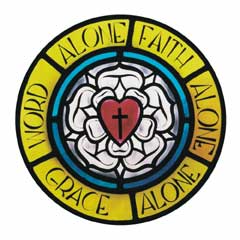
A Sermon on Genesis 32:22-31
I do not like to watch people fight on television. I do not like wrestling, I do not like boxing, and to be perfectly honest, I routinely mix up wrestling and boxing, which horrifies my husband. I am told they are entirely different sports, but I can’t stand watching either one long enough to learn the difference. Recently, despite my distaste for televised fights, I’ve been hearing a lot recently about yet a third kind of fighting, MMA, or mixed martial arts. Apparently, there is an MMA competition coming up where amateurs can compete to win a big pot of cash.
A man I know from my neighborhood who sometimes attends my church’s sandwich line is certain that that prize has his name on it. He’s been telling me for the last couple of weeks about his training regimen, his potential competitors, the friends who are coaching him. He’s told me how many push-ups and pull-ups he can do and described MMA techniques in exhaustive detail.
Finally, a few days ago, I couldn’t take it anymore. As he continued to wax poetic about roundhouse kicks and chokeholds, I told him that I thought it was a sin and a shame that people relax by watching other humans do violence to one another on television. I told him that I hoped things worked out, and I wanted the best for him, but that the world has too much senseless violence already, without people hitting each other for money and other people watching for fun. I got on my high horse, and I declared the whole endeavor ungodly and evil.
And then I read the scripture for today. It would appear that my personal distaste for wrestling is not actually reflected in all of Christian scripture and theology.
Whoops.
Showing posts with label bible. Show all posts
Monday, August 4, 2014
Sunday, June 29, 2014
Testing Faith
A Sermon on Genesis 22:1-14
I took my first SAT was when I was thirteen years old. Wandering the stacks of my local library, I happened across the test prep section, where I found row upon row of books about preparing for the SAT, the PSAT, the MCAT, the LSAT, the GED, and on and on the list went. I hadn’t heard of most of them, but as a homeschooled student, I had heard over and over again that it would be essential that I get a high SAT score if I wanted to get into a good college. I checked out Ten Real SATs, and one Saturday afternoon, I sat for three hours at the desk in my bedroom and self-administered the test. In retrospect, the very fact that I wanted to spend a Saturday afternoon taking a practice SAT for fun should have told me that I had nothing to worry about.
I sometimes read articles bemoaning our education culture of high-stakes testing and test-driven teaching. I meet parents of toddlers who are busily preparing for preschool entrance exams, and parents of middle-schoolers who are stressed and anxious about the tests that will place them into high schools. I hear of schools where test prep has to be emphasized to the exclusion of not only art and music, but also reading novels and writing essays. There are lower-stakes tests as well: every time I log on to facebook, I see that my friends are taking tests for fun: “I got House Lannister. Which Game of Thrones house are you?” their posts query. Or: “78% of Americans will get this math question wrong. Can you find the answer?” Our culture finds itself in a new and troubling relationship with testing. But I would argue that this obsession with tests and testing is nothing new.
Our First Testament reading today speaks of a very different sort of test. It comes from the book of Genesis, which has been following the patriarch Abraham, whom God promised to make a great nation and sent out to a land unknown to him. The text has made its way through many stories of Abraham: the birth of his son Ishmael by his wife’s concubine Hagar; the promise of a son to Sarah even though she was well beyond her child-bearing years; the birth of Isaac, and Abraham’s subsequent rejection of Ishmael and Hagar; all interspersed with journeys all over the Ancient Near East. Now we come to these words: “After these things God tested Abraham.” God calls out to Abraham, and Abraham answers with the prophetic response ‘hineni,’ which is not exactly translatable, but we typically render as “here I am.”
God then commands Abraham, “Take your son, your only son Isaac, whom you love, and go to the land of Moriah, and offer him there as a burnt offering.” Of course, Isaac is not Abraham’s only son, Abraham has another son, Ishmael, whom he sent away with his mother, Hagar. The Jewish tradition offers an interesting take on these words: in Hebrew, the word order is “take your son, your only one, whom you love, Isaac.” The rabbis argued that there must be a reason God uses so many words, and so they imagine Abraham playing dumb: “take your son,” says God. “Which one?” replies Abraham. “Your only son,” says God. “Isaac is the only son of his mother, and Ishmael is the only son of his mother,” Abraham responds. “The one you love,” God says. “I love both my sons,” asserts Abraham, although he has sent one of his sons into the brutal desert. “Isaac,” God finally clarifies.
The text proceeds in grim and excruciating detail, describing Abraham’s preparations, his journey with his son and two servants, then the last leg with Isaac only. Isaac questions where the lamb is, and Abraham tells him “God will provide the lamb for a burnt offering, my son.” They arrive at the place that God has appointed, and Abraham builds an altar, lays the firewood, binds Isaac, places him on the altar, and raises the knife. At the final moment, an angel calls out to him to halt, declaring, “now I know that you fear God, since you have not withheld your son, your only son, from me.” Abraham looks up and sees a ram, which he sacrifices instead of Isaac.
What are we to make of this troubling story? Traditional interpretations tend to praise Abraham’s unswerving obedience to God’s command. Perhaps you have heard interpretive statements like these: Abraham follows the path God has set out, even though it is painful and horrible, and lo and behold, at the last moment, God intervenes and provides. We, the listeners, are urged to be like Abraham, following God’s will even when it is painful, difficult, or confusing. Here’s another one: Abraham is willing to risk everything for God, and is richly rewarded. We, the listeners, should be willing to give it all up for God. Christian interpreters have pointed out the resonances between this story and that of the crucifixion: the sacrifice of an only son; the “lamb of God” who is ultimately sacrificed.
Here’s the thing, though: I find those interpretations terribly unsatisfying. Certainly, we should follow God’s will for us even at great personal cost, even when it is difficult and hard and frightening; certainly we should be willing to give up what we hold dear if that is what discipleship demands of us. Should our faith make us willing to cut the throat of another human being, let alone our own child? Do we believe in a God who would demand such a thing? Is that the God we know, the God we worship?
With questions like these in mind, interpreters have wondered whether this text might originally have been a story that spoke out against the sacrifice of human children (which was, in fact, a religious practice that sometimes happened in the cultures of that time and place). Perhaps as scripture took shape over the centuries, different traditions melded and merged, mixing themes of a God who rejects human sacrifice with themes of faithful obedience, ultimately forming the story the tradition has wrestled with ever since.
Other interpreters have asked this question: if God was testing Abraham in this way, did Abraham pass the test?
In the 1950s, the world was deeply shaken by what they had seen take place in Nazi Germany. How, people wondered, could so many people have been led to participate in such evil? A psychologist named Stanley Milgram designed an experiment, hoping to learn about what kinds of people would participate in harming strangers, and under what conditions. Were people with lower IQ’s more susceptible? Younger or older people? People from wealthy or poor backgrounds?
Here is what you would have experienced as a participant: you enter a room where you meet another participant, a middle-aged man. You randomly select roles: you will be the teacher, the man will be the learner. You watch as he is strapped into a machine with electrodes. You go into another room, where you can hear him over a speaker and speak to him over a microphone. In front of you is a machine with voltage levels and a button. You teach him a series of word pairs. Then the experiment begins: you give him one word, and he responds with its pairing word. If he gets it right, you move on. If he gets it wrong, you give him a small electrical shock with the button. After a few mistakes, you increase the voltage. After several mistakes, he starts to complain of the pain. “Ouch! That hurts! Stop!” Perhaps you look at the researcher, who assures you that everything is fine and you have to go on with the experiment. Soon his complaints get more strenuous: “Wait! I have a heart condition! I don’t want to do this anymore, let me go!” A few more wrong answers, and you turn the dial up again to a voltage marked “Danger: Severe Shock.” The learner begins to bang on the wall separating him from you, begging for mercy. If you hesitate, the researcher says, “You must continue.” You turn the dial to a setting marked “XXX.” You push the button. Then there is only silence.
About two thirds of all subjects were willing to administer that final shock four times. Two thirds. Humans, it turns out, are shockingly, devastatingly willing to harm each other because someone who is perceived as an authority figure tells them to do so. We care deeply about being approved of, being found adequate, meeting the expectations set before us, passing tests. Abraham’s willingness to sacrifice his son may not be such a remarkable show of faith as we have heard. Most people would be willing to do something similar.
Did Abraham pass the test? I kind of hope not. I imagine God waiting and hoping for Abraham to come to his senses, and finally intervening.
I do not believe in a God who rejoices in violence, whose will for us is that we should harm – or threaten to harm, or be willing to harm – other people, be they friends or enemies, strangers or our own kin. Perhaps one way to understand this story is as a reminder of how dangerous blind obedience can be. A reminder that our desire to please authority, to measure up, to pass the test, can overwhelm our own inner compass, our own sense of personal integrity. If we think that God is calling us to harm others, perhaps our response should be not “Here I am,” but “Why?” or “Did I hear you right?” or “No!”
Tragically, these questions are not abstract theological quandaries. Over the centuries, Christians have thought they heard God’s voice in scripture seeming to condone slavery, domestic abuse, sexism, and homophobia. In their zeal to follow the scriptures, churches have been willing to inflict harm on women who were thought to be witches, on unmarried mothers, on Jews and Muslims, on gay and trans* teenagers, and on and on and on. And today, as the LGBT community and allies of our city gather for Pride celebrations, we remember all the harm that has been done to that community, as we declare that God rejoices in human diversity and calls the church to bless and not to harm.
The good news of the Gospel is this: there is no test set before us; we do not need to prove we are good enough, faithful enough, smart enough, or brave enough. We are loved with a love that cannot be broken by our failure to measure up. We are loved with a love that loves us despite our obsession with measuring up. Jesus came not to test us, but to show God’s love for us. The work before us is not to pass a test, but to live in faithful gratitude.
The life of faith is not a test. The life of faith is not blind obedience that harms God’s beloved children. Living faithfully means bearing witness to God’s love, living our way toward God’s vision for the world. Living faithfully is speaking out against injustice and violence. It is doing justice and loving kindness. Resisting misinterpretations of scripture that condone violence and prejudice, classism and sexism and homophobia. Standing up against bigotry and hatred. Declaring our faith in a God who calls us to do good and not to do harm. Living faithfully means knowing that God may call us to sacrifice wealth and possessions, or prestige and position, or even – sometimes – our own safety, but will never call us to sacrifice our integrity or the wellbeing of others.
So wherever this road of faith leads us, let us follow with faith and trust in the God who is always at work to bring peace and healing, justice and mercy, to all people.
Amen.
I took my first SAT was when I was thirteen years old. Wandering the stacks of my local library, I happened across the test prep section, where I found row upon row of books about preparing for the SAT, the PSAT, the MCAT, the LSAT, the GED, and on and on the list went. I hadn’t heard of most of them, but as a homeschooled student, I had heard over and over again that it would be essential that I get a high SAT score if I wanted to get into a good college. I checked out Ten Real SATs, and one Saturday afternoon, I sat for three hours at the desk in my bedroom and self-administered the test. In retrospect, the very fact that I wanted to spend a Saturday afternoon taking a practice SAT for fun should have told me that I had nothing to worry about.
I sometimes read articles bemoaning our education culture of high-stakes testing and test-driven teaching. I meet parents of toddlers who are busily preparing for preschool entrance exams, and parents of middle-schoolers who are stressed and anxious about the tests that will place them into high schools. I hear of schools where test prep has to be emphasized to the exclusion of not only art and music, but also reading novels and writing essays. There are lower-stakes tests as well: every time I log on to facebook, I see that my friends are taking tests for fun: “I got House Lannister. Which Game of Thrones house are you?” their posts query. Or: “78% of Americans will get this math question wrong. Can you find the answer?” Our culture finds itself in a new and troubling relationship with testing. But I would argue that this obsession with tests and testing is nothing new.
Our First Testament reading today speaks of a very different sort of test. It comes from the book of Genesis, which has been following the patriarch Abraham, whom God promised to make a great nation and sent out to a land unknown to him. The text has made its way through many stories of Abraham: the birth of his son Ishmael by his wife’s concubine Hagar; the promise of a son to Sarah even though she was well beyond her child-bearing years; the birth of Isaac, and Abraham’s subsequent rejection of Ishmael and Hagar; all interspersed with journeys all over the Ancient Near East. Now we come to these words: “After these things God tested Abraham.” God calls out to Abraham, and Abraham answers with the prophetic response ‘hineni,’ which is not exactly translatable, but we typically render as “here I am.”
God then commands Abraham, “Take your son, your only son Isaac, whom you love, and go to the land of Moriah, and offer him there as a burnt offering.” Of course, Isaac is not Abraham’s only son, Abraham has another son, Ishmael, whom he sent away with his mother, Hagar. The Jewish tradition offers an interesting take on these words: in Hebrew, the word order is “take your son, your only one, whom you love, Isaac.” The rabbis argued that there must be a reason God uses so many words, and so they imagine Abraham playing dumb: “take your son,” says God. “Which one?” replies Abraham. “Your only son,” says God. “Isaac is the only son of his mother, and Ishmael is the only son of his mother,” Abraham responds. “The one you love,” God says. “I love both my sons,” asserts Abraham, although he has sent one of his sons into the brutal desert. “Isaac,” God finally clarifies.
The text proceeds in grim and excruciating detail, describing Abraham’s preparations, his journey with his son and two servants, then the last leg with Isaac only. Isaac questions where the lamb is, and Abraham tells him “God will provide the lamb for a burnt offering, my son.” They arrive at the place that God has appointed, and Abraham builds an altar, lays the firewood, binds Isaac, places him on the altar, and raises the knife. At the final moment, an angel calls out to him to halt, declaring, “now I know that you fear God, since you have not withheld your son, your only son, from me.” Abraham looks up and sees a ram, which he sacrifices instead of Isaac.
What are we to make of this troubling story? Traditional interpretations tend to praise Abraham’s unswerving obedience to God’s command. Perhaps you have heard interpretive statements like these: Abraham follows the path God has set out, even though it is painful and horrible, and lo and behold, at the last moment, God intervenes and provides. We, the listeners, are urged to be like Abraham, following God’s will even when it is painful, difficult, or confusing. Here’s another one: Abraham is willing to risk everything for God, and is richly rewarded. We, the listeners, should be willing to give it all up for God. Christian interpreters have pointed out the resonances between this story and that of the crucifixion: the sacrifice of an only son; the “lamb of God” who is ultimately sacrificed.
Here’s the thing, though: I find those interpretations terribly unsatisfying. Certainly, we should follow God’s will for us even at great personal cost, even when it is difficult and hard and frightening; certainly we should be willing to give up what we hold dear if that is what discipleship demands of us. Should our faith make us willing to cut the throat of another human being, let alone our own child? Do we believe in a God who would demand such a thing? Is that the God we know, the God we worship?
With questions like these in mind, interpreters have wondered whether this text might originally have been a story that spoke out against the sacrifice of human children (which was, in fact, a religious practice that sometimes happened in the cultures of that time and place). Perhaps as scripture took shape over the centuries, different traditions melded and merged, mixing themes of a God who rejects human sacrifice with themes of faithful obedience, ultimately forming the story the tradition has wrestled with ever since.
Other interpreters have asked this question: if God was testing Abraham in this way, did Abraham pass the test?
In the 1950s, the world was deeply shaken by what they had seen take place in Nazi Germany. How, people wondered, could so many people have been led to participate in such evil? A psychologist named Stanley Milgram designed an experiment, hoping to learn about what kinds of people would participate in harming strangers, and under what conditions. Were people with lower IQ’s more susceptible? Younger or older people? People from wealthy or poor backgrounds?
Here is what you would have experienced as a participant: you enter a room where you meet another participant, a middle-aged man. You randomly select roles: you will be the teacher, the man will be the learner. You watch as he is strapped into a machine with electrodes. You go into another room, where you can hear him over a speaker and speak to him over a microphone. In front of you is a machine with voltage levels and a button. You teach him a series of word pairs. Then the experiment begins: you give him one word, and he responds with its pairing word. If he gets it right, you move on. If he gets it wrong, you give him a small electrical shock with the button. After a few mistakes, you increase the voltage. After several mistakes, he starts to complain of the pain. “Ouch! That hurts! Stop!” Perhaps you look at the researcher, who assures you that everything is fine and you have to go on with the experiment. Soon his complaints get more strenuous: “Wait! I have a heart condition! I don’t want to do this anymore, let me go!” A few more wrong answers, and you turn the dial up again to a voltage marked “Danger: Severe Shock.” The learner begins to bang on the wall separating him from you, begging for mercy. If you hesitate, the researcher says, “You must continue.” You turn the dial to a setting marked “XXX.” You push the button. Then there is only silence.
About two thirds of all subjects were willing to administer that final shock four times. Two thirds. Humans, it turns out, are shockingly, devastatingly willing to harm each other because someone who is perceived as an authority figure tells them to do so. We care deeply about being approved of, being found adequate, meeting the expectations set before us, passing tests. Abraham’s willingness to sacrifice his son may not be such a remarkable show of faith as we have heard. Most people would be willing to do something similar.
Did Abraham pass the test? I kind of hope not. I imagine God waiting and hoping for Abraham to come to his senses, and finally intervening.
I do not believe in a God who rejoices in violence, whose will for us is that we should harm – or threaten to harm, or be willing to harm – other people, be they friends or enemies, strangers or our own kin. Perhaps one way to understand this story is as a reminder of how dangerous blind obedience can be. A reminder that our desire to please authority, to measure up, to pass the test, can overwhelm our own inner compass, our own sense of personal integrity. If we think that God is calling us to harm others, perhaps our response should be not “Here I am,” but “Why?” or “Did I hear you right?” or “No!”
Tragically, these questions are not abstract theological quandaries. Over the centuries, Christians have thought they heard God’s voice in scripture seeming to condone slavery, domestic abuse, sexism, and homophobia. In their zeal to follow the scriptures, churches have been willing to inflict harm on women who were thought to be witches, on unmarried mothers, on Jews and Muslims, on gay and trans* teenagers, and on and on and on. And today, as the LGBT community and allies of our city gather for Pride celebrations, we remember all the harm that has been done to that community, as we declare that God rejoices in human diversity and calls the church to bless and not to harm.
The good news of the Gospel is this: there is no test set before us; we do not need to prove we are good enough, faithful enough, smart enough, or brave enough. We are loved with a love that cannot be broken by our failure to measure up. We are loved with a love that loves us despite our obsession with measuring up. Jesus came not to test us, but to show God’s love for us. The work before us is not to pass a test, but to live in faithful gratitude.
The life of faith is not a test. The life of faith is not blind obedience that harms God’s beloved children. Living faithfully means bearing witness to God’s love, living our way toward God’s vision for the world. Living faithfully is speaking out against injustice and violence. It is doing justice and loving kindness. Resisting misinterpretations of scripture that condone violence and prejudice, classism and sexism and homophobia. Standing up against bigotry and hatred. Declaring our faith in a God who calls us to do good and not to do harm. Living faithfully means knowing that God may call us to sacrifice wealth and possessions, or prestige and position, or even – sometimes – our own safety, but will never call us to sacrifice our integrity or the wellbeing of others.
So wherever this road of faith leads us, let us follow with faith and trust in the God who is always at work to bring peace and healing, justice and mercy, to all people.
Amen.
Monday, February 24, 2014
Doormats for Jesus
A Sermon on Matthew 5:38-48
It might not surprise you much to hear that I enjoyed Sunday school when I was a child. I am a pastor, after all. But you might be surprised to hear why I enjoyed Sunday school. The Bible stories were nice enough; the lessons were usually interesting; I liked some of the songs; I hated all of the crafts. But some of my favorite things about Sunday school were the climbing structures. Like so many sprawling suburban churches, my church housed a nursery school, which used the Sunday school rooms during the week. They had installed an outdoor playground with a big climbing structure made out of tires, and an indoor playspace with a structure that we called “the fort.” When my class was very well-behaved and finished our activities early – or, more often, when we were very badly behaved and our teacher gave up on trying to get anything done that day – we got to play.
One day, out on the playground, Glenn had attained an awesome perch at the top of the climbing structure when Morgan approached and shoved him out of the way to take the good spot. Glenn shoved back. And Morgan declared indignantly, “You can’t do that! You’re supposed to turn the other cheek!”
We had learned the well-known verse and discussed its message of non-violence some weeks before, and I guess some of us had figured out how to use it to our own advantage: the proper Christian response to aggression was passivity, we had learned. The proper response to violence was non-violence. The secret, therefore, was to be the aggressor! Your hapless victim would be obligated to turn the other cheek, taking your abuse meekly as Jesus commanded, and you would get your way without risk of retaliation.
Our interpretation sounds obviously wrong – because, of course, it is wrong. And yet, our misinterpretation was not created in a vacuum: in misinterpreting this passage for our own benefit, we were drawing on a Christian culture that has misinterpreted the same passage, the passage which is our Gospel reading for today.
The passage comes from the Sermon on the Mount, an extended discourse in which Jesus teaches crowds in Galilee. Many of Jesus’ best-known teachings are drawn from the Sermon on the Mount (or its counterpart in Luke): teachings like the Beatitudes, the words “judge not lest ye be judged,” and the Lord’s Prayer. Many of the teachings of the Sermon on the Mount expand on the teachings of the Law of Moses found in the first five books of the Hebrew Scriptures, which were the foundation of the Jewish faith and practice shared by Jesus, his disciples, and his followers. In today’s passage, Jesus teaches about how to deal with aggression, violence, evil, and enemies. These words are so challenging that, two millennia later, Christian societies are still trying to explain them away.
Jesus quotes a passage from Exodus: “You have heard it said, ‘an eye for an eye and a tooth for a tooth,’” he says. This system of retaliation may sound barbaric to us, but to this day, society is afflicted by the human tendency to escalate conflict – whether it is physical violence or emotional harm. Surely we can think of situations in our own lives where the desire to “get even” led to larger and larger acts of cruelty and hostility. The ancient Israelites, no less than us, struggled with that human tendency; this law commands them to “settle the score” without adding to it. But Jesus takes this limitation even further: “Do not resist an evildoer,” he says. “If anyone strikes you on your right cheek, turn the other also; and if anyone wants to sue you and take your coat, give your cloak as well; and if anyone forces you to go one mile, go also the second mile.”
Too often, Christians have heard these words as a call to meekness, docility, and passivity. We have assumed that “turning the other cheek” means patiently enduring violence, meekly submitting to abuse, silently suffering oppression. My Sunday school classmates and I thought we had learned what the words meant: if someone is mean to you, don’t get back at them, just tolerate it. That’s what our teacher had taught us, and probably what she had learned in Sunday school, and her teacher before her. Kingdoms and empires have taught this lesson to their subjects; in the days of slavery, white supremacist ministers preached this lesson to slaves; abusive spouses and parents have used it against their victims. The supposed message is that, if we act like doormats and punching bags in the face of violence, God will reward us in heaven.
Is that what Jesus is saying? I don’t think so.
Biblical scholar Walter Wink has pointed out that Jesus specifically refers to the “right cheek.” In order for a right-handed person to strike someone on the right cheek, he argues, the blow must be with the back of the hand, which he says would be a dehumanizing and disrespectful gesture in the ancient world (as it still is, to a lesser extent, in ours), a gesture meant to reinforce hierarchies. Looking at the legal codes of the time, Wink notes that the fine for striking an equal with the back of the hand was one hundred times as much as the fine for striking an equal with a fist; there was no penalty for backhanding someone of a lower social station. “A backhand slap was the normal way of admonishing inferiors,” Wink declares. “Masters backhanded slaves; husbands, wives; parents, children; men, women; Romans, Jews.” Wink argues that when Jesus teaches his followers to turn the other cheek, he is suggesting that they demand to be engaged as an equal, upsetting the balance of power by refusing to either fight back or accept their aggressor’s dominance.
Perhaps Wink is right, or perhaps he’s stretching his inferences a bit further than the text can bear, but either way, he touches on something that I think is important: turning the other cheek is not an act of resigned acceptance. Jesus does not say, “if anyone strikes you on the right cheek, let them strike you again as many times as they want.” He does not say, “if anyone strikes you on the right cheek, look meekly down at the ground.” He does not say “if anyone strikes you on the right cheek, be still and silent and passive.” If we listen with fresh ears, we can perhaps hear the power of this teaching: “if anyone strikes you on the right cheek,” he might be saying, “surprise them. Don’t do what they’re expecting. Don’t cower, don’t fight back. With your cheek still stinging and your eyes still watering, look them in the eye and say, ‘Now hit me here.’”
Jesus invites his followers to confront violence – to confront it – but not with more violence. He does not call them to be doormats and pushovers. He calls them to be courageous witnesses to another way of living. Turning the other cheek is non-violent, but make no mistake, it is confrontational. It turns a mirror on cruelty and injustice, shines holy light on hatred and evil, and confronts the powers of evil and oppression with the power of the Reign of God.
On Martin Luther King Day this year, a history blog published an image of an incredible document: type-written guidelines by Rev. Dr. Martin Luther King Jr. and other leaders of the Montgomery Improvement Association, directed to the African American community of Montgomery, Alabama as the bus boycott came to an end. The guidelines give advice to African Americans boarding racially integrated buses, and give voice, for that time and place, to some of the principles I believe Jesus was espousing when he told his followers to “turn the other cheek.” “If there is violence in word or deed,” the document declares, “it must not be our people who commit it.” “Be quiet but friendly; proud, but not arrogant; joyous, but not boisterous. Be loving enough to absorb evil and understanding enough to turn an enemy into a friend.”
The document offers some specific strategies, some of which might sound odd to modern ears: “Do not deliberately sit by a white person unless there is no other seat,” Rev. King and his colleagues advise their African American readers. Later, they counsel: “If another person is being molested, do not arise to go to his defense, but pray for the oppressor and use moral and spiritual force to carry on the struggle for justice.” At first, this seemed strange to me: why would Rev. King advise his followers not to advocate for each other? But in his time and place, this was how he applied Jesus’ admonition to turn the other cheek: turning the other cheek means confronting violence and injustice in an unexpected way. Rev. King is perhaps anticipating that white racists will try to pick fights and incite riots; he warns his community not to fall into that trap, but to rise above it. That was a way of turning the other cheek, in that time and place, for that community.
And what about our community? How do we practice this challenging teaching? Many of us are fortunate not to face regular threats of violence on the streets and subways, in our places of work and leisure. Unlike Jesus’ followers, there are no Roman centurions who are legally entitled to hit us on the right cheek, or force us to carry their pack for a mile. Injustice, oppression, and violence take other forms now, but they still exist – in huge societal systems, and in everyday interactions with other people. I see it when sandwich line volunteers arrive at the church shaken by a homophobic or transphobic remark. I see it when I hear about how young African American men are treated in New York City department stores, and how their murderers are treated in courts of law. I see it when legislators mischaracterize food stamps recipients as lazy, dishonest, and undeserving.
I observed it the day I arrived at church for work one weekday morning and saw a man sitting on the steps of the church, aggressively shouting unwanted sexual comments at young women passing by. I wish I had lived up to Jesus’ teaching as I understand it. I wish I had found a way to say or do something that drew attention to the human dignity of the women he was humiliating with his rude words, something that would knock him off-balance and make him reconsider his actions, something that would invite him to a different and holier way of living in the world with his fellow humans. What I actually did was tell him to shut his mouth and get the – ahem – off my church steps.
Jesus’ admonition to turn the other cheek is hard. It’s hard because it calls us to resist our desire for vindication and vengeance. It’s hard because it requires us to use imagination in moments when we want to fight or flee. It’s hard because it isn’t a recipe for holiness, but a call to creative, non-violent confrontation – a call which we need to answer differently depending on the particulars of the situation.
But the good news is that we are not called to do the work of justice alone, friends. We have each other, we have the witness of generations of saints who have walked this path of love and justice, and we have the Holy Spirit. And when we answer Jesus’ call – when we answer hate with love, humiliation with dignity, thoughtless cruelty with creative non-violence, when we turn the other cheek – it is like the tiny pinch of yeast which leavens the whole loaf, like the little green shoots that push through the cracks of the concrete, like the light which shines in the darkness; it is like the Kingdom of God.
Thanks be to God.
Amen.
It might not surprise you much to hear that I enjoyed Sunday school when I was a child. I am a pastor, after all. But you might be surprised to hear why I enjoyed Sunday school. The Bible stories were nice enough; the lessons were usually interesting; I liked some of the songs; I hated all of the crafts. But some of my favorite things about Sunday school were the climbing structures. Like so many sprawling suburban churches, my church housed a nursery school, which used the Sunday school rooms during the week. They had installed an outdoor playground with a big climbing structure made out of tires, and an indoor playspace with a structure that we called “the fort.” When my class was very well-behaved and finished our activities early – or, more often, when we were very badly behaved and our teacher gave up on trying to get anything done that day – we got to play.
One day, out on the playground, Glenn had attained an awesome perch at the top of the climbing structure when Morgan approached and shoved him out of the way to take the good spot. Glenn shoved back. And Morgan declared indignantly, “You can’t do that! You’re supposed to turn the other cheek!”
We had learned the well-known verse and discussed its message of non-violence some weeks before, and I guess some of us had figured out how to use it to our own advantage: the proper Christian response to aggression was passivity, we had learned. The proper response to violence was non-violence. The secret, therefore, was to be the aggressor! Your hapless victim would be obligated to turn the other cheek, taking your abuse meekly as Jesus commanded, and you would get your way without risk of retaliation.
Our interpretation sounds obviously wrong – because, of course, it is wrong. And yet, our misinterpretation was not created in a vacuum: in misinterpreting this passage for our own benefit, we were drawing on a Christian culture that has misinterpreted the same passage, the passage which is our Gospel reading for today.
The passage comes from the Sermon on the Mount, an extended discourse in which Jesus teaches crowds in Galilee. Many of Jesus’ best-known teachings are drawn from the Sermon on the Mount (or its counterpart in Luke): teachings like the Beatitudes, the words “judge not lest ye be judged,” and the Lord’s Prayer. Many of the teachings of the Sermon on the Mount expand on the teachings of the Law of Moses found in the first five books of the Hebrew Scriptures, which were the foundation of the Jewish faith and practice shared by Jesus, his disciples, and his followers. In today’s passage, Jesus teaches about how to deal with aggression, violence, evil, and enemies. These words are so challenging that, two millennia later, Christian societies are still trying to explain them away.
Jesus quotes a passage from Exodus: “You have heard it said, ‘an eye for an eye and a tooth for a tooth,’” he says. This system of retaliation may sound barbaric to us, but to this day, society is afflicted by the human tendency to escalate conflict – whether it is physical violence or emotional harm. Surely we can think of situations in our own lives where the desire to “get even” led to larger and larger acts of cruelty and hostility. The ancient Israelites, no less than us, struggled with that human tendency; this law commands them to “settle the score” without adding to it. But Jesus takes this limitation even further: “Do not resist an evildoer,” he says. “If anyone strikes you on your right cheek, turn the other also; and if anyone wants to sue you and take your coat, give your cloak as well; and if anyone forces you to go one mile, go also the second mile.”
Too often, Christians have heard these words as a call to meekness, docility, and passivity. We have assumed that “turning the other cheek” means patiently enduring violence, meekly submitting to abuse, silently suffering oppression. My Sunday school classmates and I thought we had learned what the words meant: if someone is mean to you, don’t get back at them, just tolerate it. That’s what our teacher had taught us, and probably what she had learned in Sunday school, and her teacher before her. Kingdoms and empires have taught this lesson to their subjects; in the days of slavery, white supremacist ministers preached this lesson to slaves; abusive spouses and parents have used it against their victims. The supposed message is that, if we act like doormats and punching bags in the face of violence, God will reward us in heaven.
Is that what Jesus is saying? I don’t think so.
Biblical scholar Walter Wink has pointed out that Jesus specifically refers to the “right cheek.” In order for a right-handed person to strike someone on the right cheek, he argues, the blow must be with the back of the hand, which he says would be a dehumanizing and disrespectful gesture in the ancient world (as it still is, to a lesser extent, in ours), a gesture meant to reinforce hierarchies. Looking at the legal codes of the time, Wink notes that the fine for striking an equal with the back of the hand was one hundred times as much as the fine for striking an equal with a fist; there was no penalty for backhanding someone of a lower social station. “A backhand slap was the normal way of admonishing inferiors,” Wink declares. “Masters backhanded slaves; husbands, wives; parents, children; men, women; Romans, Jews.” Wink argues that when Jesus teaches his followers to turn the other cheek, he is suggesting that they demand to be engaged as an equal, upsetting the balance of power by refusing to either fight back or accept their aggressor’s dominance.
Perhaps Wink is right, or perhaps he’s stretching his inferences a bit further than the text can bear, but either way, he touches on something that I think is important: turning the other cheek is not an act of resigned acceptance. Jesus does not say, “if anyone strikes you on the right cheek, let them strike you again as many times as they want.” He does not say, “if anyone strikes you on the right cheek, look meekly down at the ground.” He does not say “if anyone strikes you on the right cheek, be still and silent and passive.” If we listen with fresh ears, we can perhaps hear the power of this teaching: “if anyone strikes you on the right cheek,” he might be saying, “surprise them. Don’t do what they’re expecting. Don’t cower, don’t fight back. With your cheek still stinging and your eyes still watering, look them in the eye and say, ‘Now hit me here.’”
Jesus invites his followers to confront violence – to confront it – but not with more violence. He does not call them to be doormats and pushovers. He calls them to be courageous witnesses to another way of living. Turning the other cheek is non-violent, but make no mistake, it is confrontational. It turns a mirror on cruelty and injustice, shines holy light on hatred and evil, and confronts the powers of evil and oppression with the power of the Reign of God.
On Martin Luther King Day this year, a history blog published an image of an incredible document: type-written guidelines by Rev. Dr. Martin Luther King Jr. and other leaders of the Montgomery Improvement Association, directed to the African American community of Montgomery, Alabama as the bus boycott came to an end. The guidelines give advice to African Americans boarding racially integrated buses, and give voice, for that time and place, to some of the principles I believe Jesus was espousing when he told his followers to “turn the other cheek.” “If there is violence in word or deed,” the document declares, “it must not be our people who commit it.” “Be quiet but friendly; proud, but not arrogant; joyous, but not boisterous. Be loving enough to absorb evil and understanding enough to turn an enemy into a friend.”
The document offers some specific strategies, some of which might sound odd to modern ears: “Do not deliberately sit by a white person unless there is no other seat,” Rev. King and his colleagues advise their African American readers. Later, they counsel: “If another person is being molested, do not arise to go to his defense, but pray for the oppressor and use moral and spiritual force to carry on the struggle for justice.” At first, this seemed strange to me: why would Rev. King advise his followers not to advocate for each other? But in his time and place, this was how he applied Jesus’ admonition to turn the other cheek: turning the other cheek means confronting violence and injustice in an unexpected way. Rev. King is perhaps anticipating that white racists will try to pick fights and incite riots; he warns his community not to fall into that trap, but to rise above it. That was a way of turning the other cheek, in that time and place, for that community.
And what about our community? How do we practice this challenging teaching? Many of us are fortunate not to face regular threats of violence on the streets and subways, in our places of work and leisure. Unlike Jesus’ followers, there are no Roman centurions who are legally entitled to hit us on the right cheek, or force us to carry their pack for a mile. Injustice, oppression, and violence take other forms now, but they still exist – in huge societal systems, and in everyday interactions with other people. I see it when sandwich line volunteers arrive at the church shaken by a homophobic or transphobic remark. I see it when I hear about how young African American men are treated in New York City department stores, and how their murderers are treated in courts of law. I see it when legislators mischaracterize food stamps recipients as lazy, dishonest, and undeserving.
I observed it the day I arrived at church for work one weekday morning and saw a man sitting on the steps of the church, aggressively shouting unwanted sexual comments at young women passing by. I wish I had lived up to Jesus’ teaching as I understand it. I wish I had found a way to say or do something that drew attention to the human dignity of the women he was humiliating with his rude words, something that would knock him off-balance and make him reconsider his actions, something that would invite him to a different and holier way of living in the world with his fellow humans. What I actually did was tell him to shut his mouth and get the – ahem – off my church steps.
Jesus’ admonition to turn the other cheek is hard. It’s hard because it calls us to resist our desire for vindication and vengeance. It’s hard because it requires us to use imagination in moments when we want to fight or flee. It’s hard because it isn’t a recipe for holiness, but a call to creative, non-violent confrontation – a call which we need to answer differently depending on the particulars of the situation.
But the good news is that we are not called to do the work of justice alone, friends. We have each other, we have the witness of generations of saints who have walked this path of love and justice, and we have the Holy Spirit. And when we answer Jesus’ call – when we answer hate with love, humiliation with dignity, thoughtless cruelty with creative non-violence, when we turn the other cheek – it is like the tiny pinch of yeast which leavens the whole loaf, like the little green shoots that push through the cracks of the concrete, like the light which shines in the darkness; it is like the Kingdom of God.
Thanks be to God.
Amen.
Labels:
bible,
jesus,
kid logic,
mlk,
new testament,
nonviolence,
sermon,
street harrassment,
violence,
walter wink
Tuesday, November 19, 2013
Ora et Labora
![]() |
| Sandwich line volunteers and clients |
“Anyone unwilling to work should not eat.” Who knew that was in the Bible? When we think of the great teachings of the Christian faith, we’re more likely to think of “Love God and your neighbor” or “Blessed are the poor in spirit” or “Nothing can separate us from the love of God.” Sometimes we mistakenly think that all the harsh, punitive, and legalistic texts of the Bible are found in the Old Testament, and that the New Testament speaks only and always of a God of grace, mercy, and niceness. But tucked away in the dusty and neglected corners of the New Testament, we find teachings that appear just as troubling as the difficult texts of the Hebrew scriptures. There it is in black and white: “anyone unwilling to work should not eat.”
This passage comes from Second Thessalonians, a letter which may or may not be by the apostle Paul. Although the author identifies himself as Paul, in the ancient world, it was common for people to write under the name of the great thinkers whom they admired and hoped to emulate. For a Christian to write a letter that appears to be by Paul would not have been seen as dishonest or unethical – it would have been the moral equivalent of playing in a Beatles tribute band. Second Thessalonians is the most heavily disputed of the epistles which claim to be by Paul – there are solid scholarly arguments to be made either way. For the sake of simplicity, I’ll just refer to the author as Paul today. But ultimately, whether it is by Paul or by one of his followers, it is there in our Bible. It would be a mistake to try to write it off as non-Pauline and therefore unimportant just because it makes us uncomfortable. In some ways, the scriptures we struggle to make sense of are the most important to wrestle with, because they can be so easily misused.
This very passage was being misused in the news this past May. In debates about cutting the Supplemental Nutrition Assistance Program (more commonly known as food stamps) Representative Stephen Fincher pointed to this verse from Second Thessalonians as justification for cutting the program’s budget by $4 billion. Of course, the congressman was arguing based on the false assumption that food stamps recipients are primarily people who could be working but are not. In fact, 41% of households receiving food stamps have at least one working adult – but fulltime work at minimum wage still leaves people in poverty, and so many turn to food stamps to help stretch their paycheck. Furthermore, 76% of households receiving food stamps include at least one child, elderly person, or handicapped person. Hardly a good application for a scripture verse about those “unwilling to work”!
But more importantly, using this verse to argue about poverty relief legislation misses the context of the verse entirely. Second Thessalonians is a short letter addressed to the Christian community in Thessalonica, which is located in modern-day Greece, a community which was founded by the Apostle Paul. Paul and the Thessalonian church believed that the second coming of Christ was imminent – they assumed that it would certainly occur during their lifetimes, and they awaited it anxiously and with great anticipation. The entirety of the letter is crafted in response to this assumption, and to the things that were happening in the community because of it.
Given that most of the rest of the epistle deals with concerns about the return of Christ, some commentators suggest that this section about work and idleness flows from those concerns as well. Some of the Thessalonian Christians, they suggest, were so certain that Jesus was returning imminently that they stopped working – after all, what need is there to work if the world as we know is going to end and the Reign of God will begin within weeks? They wouldn’t be the last – many sects and cults in the centuries since then have asked believers to leave their lives, jobs, and families to make final preparations for the end of days.
But, of course, Jesus did not descend from the clouds in glory, and as the weeks and months and years stretched on, commentators suggest that perhaps those early Christians turned to the church to support their material needs as they continued to watch and wait, and that the passage addresses these people. Perhaps they even saw their imposition on the community as a sign of spiritual superiority – that they were truly devoting themselves to the life of faith, rather than spending time on the mundane matters of daily life. In response to this, the epistle points back to Paul’s ministry: Paul worked as a tentmaker to support himself, even though he also declared that those who devote their lives to spreading the Gospel should receive financial support from the Christian community. If even Paul worked to support himself, the letter argues, why shouldn’t these believers?
This passage is not addressing the question of whether nations or churches should support programs that relieve poverty – although I would argue that both Paul and Jesus believe in feeding the hungry. The passage does not address at all the question of people who are unable to work. It focuses on the internal workings of the Christian community, calling for a community where everyone cares for their own needs and contributes to the needs of the community as they are able. Our seminary intern Stephen noted in our conversation this week that the word “work” need not refer specifically to employment as we understand it – “work” could refer also to the work of the community, the work of parenting, the work of ministering to the wider world.
In the sixth century, a great saint of the church named Benedict fleshed out a vision of a community of faith working together in a text which we now know as the Rule of St. Benedict. Christianity was taking a new turn, as some people began to form monasteries, organized Christian communities separate from the rest of the secular world, to live out their faith. Benedict founded several such monasteries, and crafted the Rule to guide those communities. The Rule calls all members of the community to “ora et labora,” or prayer and work. Benedict offers guidelines for balancing work and prayer: at certain hours of the day, the entire community is to engage in the work that keeps the monastery going, tending gardens, working in the kitchens, and so forth. Those with special skills can be set to specialized tasks, but only if it does not lead them to feel superior and haughty toward those without special skills. And those who are ill, infirm, very old or very young should be given work that neither leaves them idle nor wearied by the strain of hard labor. I like to think that, although the language of Second Thessalonians is shockingly harsh, its intention is to point toward this kind of vision of a community living and working and praying together.
For many years, our church has offered a sandwich line for hungry people, a ministry that we cosponsor with our Catholic brothers and sisters from the Franciscan Community Center. For years, the sandwich line took place outdoors: dozens of people, many of them elderly and physically impaired, would line up outside the church, waiting for waiting for almost an hour in the cold or the heat or the rain for a bag lunch. About a year ago, we made a big change: we opened our doors, set up chairs in the basement, brewed an enormous urn of coffee, and moved our sandwich line inside. We weren’t sure we would be able to manage it, because we knew it would be a lot more work. But something amazing happened: when there was good work to be done, people were excited to do it. Our team of volunteers grew and is growing, and more importantly, the sandwich line clients themselves help out as they are able. Some of the able-bodied folks help us to put the chairs away. People bring cups of coffee to the frailest, like Felicia, who will turn 92 this Wednesday. When there’s an announcement to be made, one of our bilingual clients helps us by translating into Spanish. When the elevator broke, one woman took it upon herself to care for the people who couldn’t make it down the stairs, carrying pastries and sandwiches up the stairs to them, making sure they felt included.
When I hear a congressman justify cutting food stamps with the words “anyone unwilling to work should not eat,” I wish I could show him our sandwich line: the sense of community, the willing hands, the people caring for another; the very people he dismisses as lazy, working together to create an oasis of grace and mutuality in an unjust world.
So I don’t mean to make excuses for Paul. But the more I think about it, the more I think I understand where he was coming from: frustrated at the failings of human communities, he admonishes them in the hope of motivating them to move toward a vision of a different way of living. A way where willing hands offer what they have to strengthen the church. A way where holy purpose shapes the community and its members in their living and their giving. A way where those who know the grace and love of God pour that grace out into the world.
Thanks be to God.
Amen.
Thursday, October 31, 2013
Not Like Other People
A Sermon on Luke 18:9-14 for Reformation Sunday
One day about ten years ago, I sat down in the freshman dining hall at my college. It was early in the year, and friendships hadn’t really formed yet, so I had arrived alone, and sat down to eat lunch with two people I recognized. We all had met briefly in the whirl of orientation events, but we didn’t know each other particularly well.
“What does your necklace say?” the young man asked, gesturing at the young woman’s silver necklace.
"Sola scriptura, sola gratia, sola fide,” the young woman replied.
“What does that mean?” he asked.
“Scripture alone, grace alone, faith alone,” she answered.
“So it’s a religious thing?” he continued.
“Yes, she answered, it’s a Christian thing.”
“I’m Christian, and I’ve never heard of it,” he mused. So she began to explain.
She was a devout Lutheran, as it so happened, and the words on her necklace were three of the most important theological tenets of the Protestant Reformation. “Sola scriptura” means “scripture alone.” This was a core principle propounded by the Reformers, people like Martin Luther and John Calvin, who were the spiritual ancestors of Lutheran churches like hers, UCC churches like ours, and many other denominations as well. Against a church that claimed the authority to speak on behalf of God, the Reformers declared that all Christian teaching must be based on the Bible – putting the authority to study and discern the will of God back into the hands of any person, clergy or lay, who had access to a Bible and the ability to read it. “Sola gratia” means “grace alone”; the Reformers taught that God’s love is not meted out based on our merits; we do not, and cannot, earn God’s love. God’s love simply comes to us, regardless of anything we do or fail to do. “Sola fide” means “faith alone”; Reformers like Martin Luther and John Calvin saw that many Christians – lay and clergy – treated the life of faith as if it were a to-do list: check off all of the boxes, and you would be saved. Against this, they asserted that faith in God is all that is required for salvation, and is the only path to salvation – not going to church, not refraining from sin, not praying every morning and night, not giving all your money to charity – simply faith.
The young woman at the dining hall table explained the three tenets to us (although perhaps not in those exact words) - beliefs that I would later encounter again and again in my studies as a religion major and then a seminary student. And she concluded with something like, “So that’s why Catholics are wrong.”
“Are there a lot of Catholics where you’re from?” the young man asked.
“No, I’ve never actually met one before,” she answered.
“I’m Catholic,” he told us.
“…Oh…” she said, with obvious discomfort.
We all hurried through our lunches, talking about the weather and our class schedules, and I haven’t seen much of them since. But the story comes to mind on this day, Reformation Sunday, as we remember the Protestant Reformers who are the spiritual ancestors of our faith community. And it comes to mind especially as we encounter today’s Gospel lesson, a parable from the Gospel according to Luke.
Speaking to an unfriendly audience, Jesus tells them this parable: two men went to the temple to pray. One was a Pharisee. Now, the Pharisees and the early Christians were often at odds with each other, and so the Christian tradition has come to hear the word “Pharisee” as if it simply meant “bad guy” or “hypocrite.” But the Pharisees were more than that. In a culture where religious observance was largely the purview of religious elites, the Pharisees advocated for more robust religious practice in the daily lives of everyday people. They wanted religion to be practiced by the people, not just seen to by the priests – a concern that they shared with the Protestant Reformers hundreds of years later.
So a Pharisee went to the temple to pray, and he said, “God, I thank you that I am not like other people: thieves, rogues, adulterers, or even like this tax collector. I fast twice a week; I give a tenth of all my income.” Well, that’s pretty repulsive, right? Giving thanks for his superiority to others is a rather arrogant prayer. And yet, he does have reason to boast: he fasts twice a week and gives a tenth of his income, he says. That is to say, he is really making some serious sacrifices to put his faith at the center of his life. One commentator I read observed that churches would be glad to have more members like this Pharisee – who pour their energy into their religious community and life of faith.
Meanwhile, the tax collector also prays. Tax collectors are another set of stock characters in scripture who are unfamiliar in our modern context (they’re not at all like IRS agents), but unlike Pharisees, who get cast as bad guys because they were in a theological debate with the early Christians, tax collectors were universally despised in Jesus’ context. They paid the Roman authorities a fixed amount for the privilege of extracting exorbitant taxes from Rome’s colonial subjects by any means necessary. They collected as much money as they could bully and brutalize out of the people of their region, paid a set amount to Rome, and got to keep however much was left. They were collaborators with an oppressive imperial regime, their income was squeezed out of people who often were barely subsisting, and they were hated for it. But this tax collector goes to the temple to pray and, Jesus says, he “would not even look up to heaven” to pray; his posture is humble. He beats his breast and prays, “Lord, be merciful to me, a sinner.” Jesus declares that the tax collector “went home justified,” unlike the Pharisee. “All who exalt themselves will be humbled, but all who humble themselves will be exalted,” Jesus concludes.
It is an apt parable to hear on Reformation Sunday, and the temptation would be to cast the Reformers and those who follow them as the tax collector, and the Catholic church they stood against as the Pharisee. Unlike the Pharisee, who believes he can earn his way into God’s heart through fasting, prayer, and tithing, the theology of the Protestant Reformation places the emphasis on God’s love and forgiveness. The emphasis is on God’s faithfulness, not on human faithfulness. Reformed theology emphasizes that we are imperfect – that we mess up and fall short. It teaches that our relationship with God is not predicated on our being good enough. God will always be reaching out to us, because God is loving and gracious and merciful. This parable is kind of a prime example of “sola fide” and “sola gratia.” It would be tempting to conclude that, like the tax collector who puts his faith in God’s grace, we must remember our spiritual heritage and cling tightly to the legacy of the reformers.
The problem is that, if we followed that interpretation through to its logical conclusion, we might then conclude with a sentiment like this: “God, we thank you that we are not like the Pharisee. We understand theology. We believe in grace and mercy.” And then we would be right back where we started: like the Pharisee, we would be patting ourselves on the backs for having it right, and looking down our noses at those whom we think have gotten it wrong – defining our faith not as a positive expression of our relationship with God through Christ, but in contrast to inaccurate stereotypes of other faith traditions.
Like that young woman in the freshman dining hall, like the Pharisee in the parable, it is tempting to define ourselves based on our assumptions of our own superiority. God, we thank you that we are not like the tax collector. God, we thank you that we are not like the Pharisee.
God, we thank you that we are not like the Catholics, or the fundamentalists, or those fancy Manhattan churches where you’d better have just the right clothes and plenty of money. God, we thank you that we are not like the churches that oppose LGBT inclusion. God, we thank you that we are not like all those people who show up at church only on Christmas and Easter. God, we thank you that we are not like those people who think watching a televangelist counts as going to church. God, we thank you that we are not like that young woman in the freshman dining hall.
Jesus tells us this parable of the Pharisee and the tax collector not so that we can judge the judgmental Pharisee, but to invite us to reconsider how self-righteousness and judgment might stand in the way of our own relationship with God. The Pharisee’s prayer reveals that he is so concerned about how he measures up in God’s eyes that his view of God’s creation is distorted. “I thank you that I am not like other people,” he says. But the other people he names are all children of God, created in God’s image, people who make mistakes and fall short, people who judge others and doubt themselves, people who are capable of love and courage and faithfulness. People from whom the Pharisee might learn something about God, if he had ears to hear. And as we hear this parable, the judgment we feel toward the Pharisee reminds us that we, like him, sometimes slip into judgment and condemnation. Like him, we sometimes forget that in God’s eyes, we are all equally beloved and beautiful, not because of what we have done or failed to do, but simply because we are children of God. And God loves us not because we are better or more correct than other people, but simply because God loves us.
So as we hear this parable on this Reformation Sunday, let us give thanks for our spiritual heritage not because it makes us better than other traditions (I'm not sure it does), but because it draws us closer to the God who made us all, Pharisees and tax collectors and everything in between. The God who loves us all, Protestants and Catholics and everyone else. The God who has mercy on us all, saints and sinners and those of us – all of us – who are a little of both.
Amen.
One day about ten years ago, I sat down in the freshman dining hall at my college. It was early in the year, and friendships hadn’t really formed yet, so I had arrived alone, and sat down to eat lunch with two people I recognized. We all had met briefly in the whirl of orientation events, but we didn’t know each other particularly well.
“What does your necklace say?” the young man asked, gesturing at the young woman’s silver necklace.
"Sola scriptura, sola gratia, sola fide,” the young woman replied.
“What does that mean?” he asked.
“Scripture alone, grace alone, faith alone,” she answered.
“So it’s a religious thing?” he continued.
“Yes, she answered, it’s a Christian thing.”
“I’m Christian, and I’ve never heard of it,” he mused. So she began to explain.
She was a devout Lutheran, as it so happened, and the words on her necklace were three of the most important theological tenets of the Protestant Reformation. “Sola scriptura” means “scripture alone.” This was a core principle propounded by the Reformers, people like Martin Luther and John Calvin, who were the spiritual ancestors of Lutheran churches like hers, UCC churches like ours, and many other denominations as well. Against a church that claimed the authority to speak on behalf of God, the Reformers declared that all Christian teaching must be based on the Bible – putting the authority to study and discern the will of God back into the hands of any person, clergy or lay, who had access to a Bible and the ability to read it. “Sola gratia” means “grace alone”; the Reformers taught that God’s love is not meted out based on our merits; we do not, and cannot, earn God’s love. God’s love simply comes to us, regardless of anything we do or fail to do. “Sola fide” means “faith alone”; Reformers like Martin Luther and John Calvin saw that many Christians – lay and clergy – treated the life of faith as if it were a to-do list: check off all of the boxes, and you would be saved. Against this, they asserted that faith in God is all that is required for salvation, and is the only path to salvation – not going to church, not refraining from sin, not praying every morning and night, not giving all your money to charity – simply faith.
The young woman at the dining hall table explained the three tenets to us (although perhaps not in those exact words) - beliefs that I would later encounter again and again in my studies as a religion major and then a seminary student. And she concluded with something like, “So that’s why Catholics are wrong.”
“Are there a lot of Catholics where you’re from?” the young man asked.
“No, I’ve never actually met one before,” she answered.
“I’m Catholic,” he told us.
“…Oh…” she said, with obvious discomfort.
We all hurried through our lunches, talking about the weather and our class schedules, and I haven’t seen much of them since. But the story comes to mind on this day, Reformation Sunday, as we remember the Protestant Reformers who are the spiritual ancestors of our faith community. And it comes to mind especially as we encounter today’s Gospel lesson, a parable from the Gospel according to Luke.
Speaking to an unfriendly audience, Jesus tells them this parable: two men went to the temple to pray. One was a Pharisee. Now, the Pharisees and the early Christians were often at odds with each other, and so the Christian tradition has come to hear the word “Pharisee” as if it simply meant “bad guy” or “hypocrite.” But the Pharisees were more than that. In a culture where religious observance was largely the purview of religious elites, the Pharisees advocated for more robust religious practice in the daily lives of everyday people. They wanted religion to be practiced by the people, not just seen to by the priests – a concern that they shared with the Protestant Reformers hundreds of years later.
So a Pharisee went to the temple to pray, and he said, “God, I thank you that I am not like other people: thieves, rogues, adulterers, or even like this tax collector. I fast twice a week; I give a tenth of all my income.” Well, that’s pretty repulsive, right? Giving thanks for his superiority to others is a rather arrogant prayer. And yet, he does have reason to boast: he fasts twice a week and gives a tenth of his income, he says. That is to say, he is really making some serious sacrifices to put his faith at the center of his life. One commentator I read observed that churches would be glad to have more members like this Pharisee – who pour their energy into their religious community and life of faith.
Meanwhile, the tax collector also prays. Tax collectors are another set of stock characters in scripture who are unfamiliar in our modern context (they’re not at all like IRS agents), but unlike Pharisees, who get cast as bad guys because they were in a theological debate with the early Christians, tax collectors were universally despised in Jesus’ context. They paid the Roman authorities a fixed amount for the privilege of extracting exorbitant taxes from Rome’s colonial subjects by any means necessary. They collected as much money as they could bully and brutalize out of the people of their region, paid a set amount to Rome, and got to keep however much was left. They were collaborators with an oppressive imperial regime, their income was squeezed out of people who often were barely subsisting, and they were hated for it. But this tax collector goes to the temple to pray and, Jesus says, he “would not even look up to heaven” to pray; his posture is humble. He beats his breast and prays, “Lord, be merciful to me, a sinner.” Jesus declares that the tax collector “went home justified,” unlike the Pharisee. “All who exalt themselves will be humbled, but all who humble themselves will be exalted,” Jesus concludes.
It is an apt parable to hear on Reformation Sunday, and the temptation would be to cast the Reformers and those who follow them as the tax collector, and the Catholic church they stood against as the Pharisee. Unlike the Pharisee, who believes he can earn his way into God’s heart through fasting, prayer, and tithing, the theology of the Protestant Reformation places the emphasis on God’s love and forgiveness. The emphasis is on God’s faithfulness, not on human faithfulness. Reformed theology emphasizes that we are imperfect – that we mess up and fall short. It teaches that our relationship with God is not predicated on our being good enough. God will always be reaching out to us, because God is loving and gracious and merciful. This parable is kind of a prime example of “sola fide” and “sola gratia.” It would be tempting to conclude that, like the tax collector who puts his faith in God’s grace, we must remember our spiritual heritage and cling tightly to the legacy of the reformers.
The problem is that, if we followed that interpretation through to its logical conclusion, we might then conclude with a sentiment like this: “God, we thank you that we are not like the Pharisee. We understand theology. We believe in grace and mercy.” And then we would be right back where we started: like the Pharisee, we would be patting ourselves on the backs for having it right, and looking down our noses at those whom we think have gotten it wrong – defining our faith not as a positive expression of our relationship with God through Christ, but in contrast to inaccurate stereotypes of other faith traditions.
Like that young woman in the freshman dining hall, like the Pharisee in the parable, it is tempting to define ourselves based on our assumptions of our own superiority. God, we thank you that we are not like the tax collector. God, we thank you that we are not like the Pharisee.
God, we thank you that we are not like the Catholics, or the fundamentalists, or those fancy Manhattan churches where you’d better have just the right clothes and plenty of money. God, we thank you that we are not like the churches that oppose LGBT inclusion. God, we thank you that we are not like all those people who show up at church only on Christmas and Easter. God, we thank you that we are not like those people who think watching a televangelist counts as going to church. God, we thank you that we are not like that young woman in the freshman dining hall.
Jesus tells us this parable of the Pharisee and the tax collector not so that we can judge the judgmental Pharisee, but to invite us to reconsider how self-righteousness and judgment might stand in the way of our own relationship with God. The Pharisee’s prayer reveals that he is so concerned about how he measures up in God’s eyes that his view of God’s creation is distorted. “I thank you that I am not like other people,” he says. But the other people he names are all children of God, created in God’s image, people who make mistakes and fall short, people who judge others and doubt themselves, people who are capable of love and courage and faithfulness. People from whom the Pharisee might learn something about God, if he had ears to hear. And as we hear this parable, the judgment we feel toward the Pharisee reminds us that we, like him, sometimes slip into judgment and condemnation. Like him, we sometimes forget that in God’s eyes, we are all equally beloved and beautiful, not because of what we have done or failed to do, but simply because we are children of God. And God loves us not because we are better or more correct than other people, but simply because God loves us.
So as we hear this parable on this Reformation Sunday, let us give thanks for our spiritual heritage not because it makes us better than other traditions (I'm not sure it does), but because it draws us closer to the God who made us all, Pharisees and tax collectors and everything in between. The God who loves us all, Protestants and Catholics and everyone else. The God who has mercy on us all, saints and sinners and those of us – all of us – who are a little of both.
Amen.
Labels:
bible,
catholicism,
grace,
imago dei,
jesus,
new testament,
parables,
reformation,
sermon
Sunday, October 6, 2013
The Prodigal Manager
A sermon on Luke 16:1-13
Note: The sermon will make more sense if you read the parable first.
It’s a little bit embarrassing that I have opened so many sermons in the last couple of months by telling you how difficult it is to preach on whatever passage has been assigned for that Sunday. I had really hoped not to do it this week. So I opened my Bible with hope and determination, and found myself utterly puzzled by the Gospel passage. Not to be deterred, I opened my commentaries and navigated to my favorite lectionary blogs to find a little interpretive assistance. Commentator after commentator declared unequivocally that this week is known as Jesus’ most inexplicable parable.
Perhaps the problem is not with the parable, but with how we are trying to interpret it. Christian interpreters have a tendency to approach the puzzling and confusing passages of the Bible as if they were algebra problems. If we just do enough research, we imagine, the correct answer will emerge. Find the right theological concept, or Old Testament reference, or alternate meaning of a Greek word, and solve for X. The Jewish tradition, of which Jesus and the disciples were part, has other modes of interpretation that might fit better for us today. The practice of “midrash” takes those puzzling places and intriguing gaps in scripture as jumping-off points, imaginatively fleshing out characters and events with a rich tradition of stories. From this point of view, a confusing scripture is not a problem to be solved, but an opportunity for faithful imagination. Rather than an algebra equation with one correct answer, we could envision it as a melody line in need of harmonization. It’s not that “anything goes”: there are plenty of notes that will create jangling discord rather than transcendent harmony; but with study, prayer, and inspiration, there are countless ways to add to the music.
In that spirit, I am going to tell you three very short stories today, stories in the voices of three of the characters in this parable, as we imagine together what Jesus might have been saying in this parable about the rich man, the manager, and the debtors.
I
This is the first story, the story of the debtor:
A hundred jugs of oil is a lot of oil. I didn’t know if I would ever be able to pay it back. Olive oil isn’t cheap now, for all your industrialization and mechanization, but imagine what it cost us then, how much labor went into cultivating those olive groves and pressing out the oil in presses of rough-hewn stone and wood. A hundred jugs of oil I owed! Even the fifty I originally borrowed was a lot – too much – but what choice did I have? My kids needed to eat. You all talk about credit card debt and student loan debt and home owners’ debt as if debt were a twenty-first century problem, but believe me, debt is an old, old thing.
I knew that I had borrowed fifty, and Josiah the manager knew I was borrowing fifty, and the rich man Nicodemus would have known I was borrowing fifty if he kept his own books. But the Torah laws forbid charging interest. And in a world like ours, that was never going to work – no one was going to lend out of the kindness of their hearts – so everyone just knew the workaround. You would just write down the larger amount, as though that was what you had borrowed to begin with. Oil you have to pay back double, because it’s risky. The jugs can crack, or the oil can go rancid, and then the lender is out of luck.
Anyway, word got around one day that Josiah had been less than scrupulous with the books – something about sneaking food to someone and trying to cover it up. Nicodemus had caught wind of it and was firing him. When I got word that Josiah wanted me to come and see him right away, I was afraid that my loan was about to be called in. I didn’t have the hundred jugs of oil. I might, someday, be able to repay the original fifty, but not a hundred. Not today. I rushed to Nicodemus’s property, terrified by visions of what would happen to me and my children when I couldn’t pay up. Debtor’s prison? Slavery?
But that’s not what happened at all. “How much do you owe?” Josiah asked. “A hundred jugs of oil,” I replied. “Are you sure?” Josiah inquired, looking at me significantly, “I could swear I only gave you fifty.” He was right, of course; fifty is what I’d borrowed. “Let’s correct this bill,” Josiah said smoothly. And it was done, the illicit interest forgiven and my debt halved in the stroke of a pen. The reduction of my debt gave me relief, peace of mind, hope, a chance at freedom, finally, from the debt that had weighed on me. Did he do it for selfish reasons? Maybe he did. But blessing came from it anyway: when Josiah came to my door, I had something to offer: a place to stay and a warm meal for someone who had once been a debt collector, but was now a friend in need. It was a blessing and a gift to have something to offer; I, who had always had to ask and borrow and receive, was able to extend hospitality and kindness, grace freely given, as I had freely received. Thanks be to God.
II
This is the second story, the story of the manager:
You start off with the best intentions. Or at least, I had. I was hired to manage Nicodemus’s property and I swore to myself that I wouldn’t be like those other managers. You see, managers didn’t get a fixed salary, paid by the employer. Instead, their income came from extra charges to the borrowers. Someone borrows fifty jugs of oil, say, and pays back a hundred to the property, and a few to the manager as well. Tax collectors make their money the same way, but they’re even less popular, since they work for the Romans.
I never wanted to be one of the bad guys, squeezing wealth out of the desperation of the poor, but what could I do? You have to feed your kids somehow. And you want a decent pair of sandals, and maybe to eat meat at dinner every so often, and some wine. And would it really be so bad to get one piece of jewelry for your wife? Next thing you know, you’re charging as much as those guys you hated – or even more!
I felt so guilty all the time, but I just didn’t know what to do. I lived every day with this gnawing, vague sense of helplessness and shame. Sometimes I’d try to soothe my conscience – someone would come who would never be able to pay back their debt, and I’d lend to them and just never follow up. Someone in terrible need, just on the edge of ruin. I’d try to make it come out right in the books, but it never quite did.
I guess Nicodemus must’ve found out about one of them, because one day he sent me a message: he was going to need an accounting of the property, because he wasn’t going to employ me anymore. I summoned everyone who was indebted to Nicodemus, and I could feel this palpable sense of dread, as they all waited to talk to me. I could see them all, the ones I had given a break to, and the ones I had overcharged to try to cover for it, and I knew they all just hated me.
But here’s the thing: I knew my job and my comfortable life were slipping away; there was nothing I could do anymore to try to hold on to them. And once I knew that, all of the rules that had kept me bound up with guilt and worry melted away, and I knew what to do. There would be grace and mercy poured out into my life in the days to come, but I didn’t know that yet. I just knew that in the few hours I had left managing Nicodemus’s property, I finally could be faithful to the one who made me, instead of the one who employed me; I finally could serve God instead of wealth. In that room, I turned away from everything I was supposed to do, and I canceled debts left and right. I proclaimed good news to the poor, and release to those captive to crushing debt. And the Spirit of the Lord was upon me. Thanks be to God.
III
This is the third story, the story of the rich man:
I know that, comparatively speaking, I never had much to complain about. Feeling conflicted about being rich doesn’t hold a candle to the worries of families who can’t feed all their kids. I know. But there it was: I felt conflicted about my wealth. Guilty, even. I knew that the scriptures didn’t look kindly on the rich. I tried to figure out what to do about it, sometimes, but I just felt stuck. I didn’t go around making “the ephah small and the shekel great,” as the prophet Amos once wrote, but the laws against charging interest? I couldn’t just give out free money. I was rich, not stupid.
There were nice things about being wealthy, but the lending and the collecting and the accounting… it was all so uncomfortable. I was relieved to finally hire Josiah to handle things. He seemed to be doing a fine job, so mostly I just let him handle things; it was easier that way, and the less I thought about it, the less guilty I felt.
Everything was going smoothly until one evening when I was at a dinner party, where I heard from a friend that Josiah had given a winter’s worth of food to a poor widow out of my storehouses. I guess he thought he’d be able to cover it up, but she’d let it slip to the other women at the well. The story was all over town, and I was a laughing stock. I would have been willing to give the widow the food if Josiah would have just asked me, but to find out that he’d been stealing from my stores like that and trying to cover it up? I was furious. I got up the next morning and went to demand a thorough accounting, sending a messenger ahead of me.
By the time I got there, though, Josiah had taken matters into his own hands. He had canceled the interest on every single loan, and I’m pretty sure that some debts had been canceled altogether. Pride, fear, and defiance mingled on Josiah’s face. I know I should’ve been angry, but to be honest, we were so far past that that all I felt was a kind of relief, a sense of freedom. It was like all the wealth I’d accumulated had trapped me under its weight, and I didn’t realize how constricting and suffocating it was until it started to lift.
I think Josiah expected me to fire him, or worse. I probably could’ve had him thrown in jail. But I looked around at the people he had freed from debt and fear and anxiety, and I knew he had freed me as well. And so I thanked him, and I asked him to do one last thing as the manager of my property: to give it all away to whoever needed it. That night, with little more than the shoes on my feet, the clothes on my back, and the walking stick in my hand, I left my old life behind and started down the road. I’d heard there was a rabbi traveling the countryside, feeding the hungry, healing the sick, and teaching about a kingdom where grace and mercy flow like cool water. I set out to follow him. Thanks be to God. Amen.
Note: The sermon will make more sense if you read the parable first.
It’s a little bit embarrassing that I have opened so many sermons in the last couple of months by telling you how difficult it is to preach on whatever passage has been assigned for that Sunday. I had really hoped not to do it this week. So I opened my Bible with hope and determination, and found myself utterly puzzled by the Gospel passage. Not to be deterred, I opened my commentaries and navigated to my favorite lectionary blogs to find a little interpretive assistance. Commentator after commentator declared unequivocally that this week is known as Jesus’ most inexplicable parable.
Perhaps the problem is not with the parable, but with how we are trying to interpret it. Christian interpreters have a tendency to approach the puzzling and confusing passages of the Bible as if they were algebra problems. If we just do enough research, we imagine, the correct answer will emerge. Find the right theological concept, or Old Testament reference, or alternate meaning of a Greek word, and solve for X. The Jewish tradition, of which Jesus and the disciples were part, has other modes of interpretation that might fit better for us today. The practice of “midrash” takes those puzzling places and intriguing gaps in scripture as jumping-off points, imaginatively fleshing out characters and events with a rich tradition of stories. From this point of view, a confusing scripture is not a problem to be solved, but an opportunity for faithful imagination. Rather than an algebra equation with one correct answer, we could envision it as a melody line in need of harmonization. It’s not that “anything goes”: there are plenty of notes that will create jangling discord rather than transcendent harmony; but with study, prayer, and inspiration, there are countless ways to add to the music.
In that spirit, I am going to tell you three very short stories today, stories in the voices of three of the characters in this parable, as we imagine together what Jesus might have been saying in this parable about the rich man, the manager, and the debtors.
I
This is the first story, the story of the debtor:
A hundred jugs of oil is a lot of oil. I didn’t know if I would ever be able to pay it back. Olive oil isn’t cheap now, for all your industrialization and mechanization, but imagine what it cost us then, how much labor went into cultivating those olive groves and pressing out the oil in presses of rough-hewn stone and wood. A hundred jugs of oil I owed! Even the fifty I originally borrowed was a lot – too much – but what choice did I have? My kids needed to eat. You all talk about credit card debt and student loan debt and home owners’ debt as if debt were a twenty-first century problem, but believe me, debt is an old, old thing.
I knew that I had borrowed fifty, and Josiah the manager knew I was borrowing fifty, and the rich man Nicodemus would have known I was borrowing fifty if he kept his own books. But the Torah laws forbid charging interest. And in a world like ours, that was never going to work – no one was going to lend out of the kindness of their hearts – so everyone just knew the workaround. You would just write down the larger amount, as though that was what you had borrowed to begin with. Oil you have to pay back double, because it’s risky. The jugs can crack, or the oil can go rancid, and then the lender is out of luck.
Anyway, word got around one day that Josiah had been less than scrupulous with the books – something about sneaking food to someone and trying to cover it up. Nicodemus had caught wind of it and was firing him. When I got word that Josiah wanted me to come and see him right away, I was afraid that my loan was about to be called in. I didn’t have the hundred jugs of oil. I might, someday, be able to repay the original fifty, but not a hundred. Not today. I rushed to Nicodemus’s property, terrified by visions of what would happen to me and my children when I couldn’t pay up. Debtor’s prison? Slavery?
But that’s not what happened at all. “How much do you owe?” Josiah asked. “A hundred jugs of oil,” I replied. “Are you sure?” Josiah inquired, looking at me significantly, “I could swear I only gave you fifty.” He was right, of course; fifty is what I’d borrowed. “Let’s correct this bill,” Josiah said smoothly. And it was done, the illicit interest forgiven and my debt halved in the stroke of a pen. The reduction of my debt gave me relief, peace of mind, hope, a chance at freedom, finally, from the debt that had weighed on me. Did he do it for selfish reasons? Maybe he did. But blessing came from it anyway: when Josiah came to my door, I had something to offer: a place to stay and a warm meal for someone who had once been a debt collector, but was now a friend in need. It was a blessing and a gift to have something to offer; I, who had always had to ask and borrow and receive, was able to extend hospitality and kindness, grace freely given, as I had freely received. Thanks be to God.
II
This is the second story, the story of the manager:
You start off with the best intentions. Or at least, I had. I was hired to manage Nicodemus’s property and I swore to myself that I wouldn’t be like those other managers. You see, managers didn’t get a fixed salary, paid by the employer. Instead, their income came from extra charges to the borrowers. Someone borrows fifty jugs of oil, say, and pays back a hundred to the property, and a few to the manager as well. Tax collectors make their money the same way, but they’re even less popular, since they work for the Romans.
I never wanted to be one of the bad guys, squeezing wealth out of the desperation of the poor, but what could I do? You have to feed your kids somehow. And you want a decent pair of sandals, and maybe to eat meat at dinner every so often, and some wine. And would it really be so bad to get one piece of jewelry for your wife? Next thing you know, you’re charging as much as those guys you hated – or even more!
I felt so guilty all the time, but I just didn’t know what to do. I lived every day with this gnawing, vague sense of helplessness and shame. Sometimes I’d try to soothe my conscience – someone would come who would never be able to pay back their debt, and I’d lend to them and just never follow up. Someone in terrible need, just on the edge of ruin. I’d try to make it come out right in the books, but it never quite did.
I guess Nicodemus must’ve found out about one of them, because one day he sent me a message: he was going to need an accounting of the property, because he wasn’t going to employ me anymore. I summoned everyone who was indebted to Nicodemus, and I could feel this palpable sense of dread, as they all waited to talk to me. I could see them all, the ones I had given a break to, and the ones I had overcharged to try to cover for it, and I knew they all just hated me.
But here’s the thing: I knew my job and my comfortable life were slipping away; there was nothing I could do anymore to try to hold on to them. And once I knew that, all of the rules that had kept me bound up with guilt and worry melted away, and I knew what to do. There would be grace and mercy poured out into my life in the days to come, but I didn’t know that yet. I just knew that in the few hours I had left managing Nicodemus’s property, I finally could be faithful to the one who made me, instead of the one who employed me; I finally could serve God instead of wealth. In that room, I turned away from everything I was supposed to do, and I canceled debts left and right. I proclaimed good news to the poor, and release to those captive to crushing debt. And the Spirit of the Lord was upon me. Thanks be to God.
III
This is the third story, the story of the rich man:
I know that, comparatively speaking, I never had much to complain about. Feeling conflicted about being rich doesn’t hold a candle to the worries of families who can’t feed all their kids. I know. But there it was: I felt conflicted about my wealth. Guilty, even. I knew that the scriptures didn’t look kindly on the rich. I tried to figure out what to do about it, sometimes, but I just felt stuck. I didn’t go around making “the ephah small and the shekel great,” as the prophet Amos once wrote, but the laws against charging interest? I couldn’t just give out free money. I was rich, not stupid.
There were nice things about being wealthy, but the lending and the collecting and the accounting… it was all so uncomfortable. I was relieved to finally hire Josiah to handle things. He seemed to be doing a fine job, so mostly I just let him handle things; it was easier that way, and the less I thought about it, the less guilty I felt.
Everything was going smoothly until one evening when I was at a dinner party, where I heard from a friend that Josiah had given a winter’s worth of food to a poor widow out of my storehouses. I guess he thought he’d be able to cover it up, but she’d let it slip to the other women at the well. The story was all over town, and I was a laughing stock. I would have been willing to give the widow the food if Josiah would have just asked me, but to find out that he’d been stealing from my stores like that and trying to cover it up? I was furious. I got up the next morning and went to demand a thorough accounting, sending a messenger ahead of me.
By the time I got there, though, Josiah had taken matters into his own hands. He had canceled the interest on every single loan, and I’m pretty sure that some debts had been canceled altogether. Pride, fear, and defiance mingled on Josiah’s face. I know I should’ve been angry, but to be honest, we were so far past that that all I felt was a kind of relief, a sense of freedom. It was like all the wealth I’d accumulated had trapped me under its weight, and I didn’t realize how constricting and suffocating it was until it started to lift.
I think Josiah expected me to fire him, or worse. I probably could’ve had him thrown in jail. But I looked around at the people he had freed from debt and fear and anxiety, and I knew he had freed me as well. And so I thanked him, and I asked him to do one last thing as the manager of my property: to give it all away to whoever needed it. That night, with little more than the shoes on my feet, the clothes on my back, and the walking stick in my hand, I left my old life behind and started down the road. I’d heard there was a rabbi traveling the countryside, feeding the hungry, healing the sick, and teaching about a kingdom where grace and mercy flow like cool water. I set out to follow him. Thanks be to God. Amen.
Labels:
bible,
economic justice,
first person narrative,
forgiveness,
grace,
jesus,
new testament,
parables,
sermon
Thursday, March 28, 2013
Broken Bread and Broken Bodies: A Reflection for Maundy Thursday
I love communion for many reasons; I love the idea of sharing equally in the bread, against everything the world teaches us about who should have more and who should have less; I love that this tradition connects us to Christians around the world and through the centuries; I love that we are asked to remember Jesus not just with our minds, but with our bodies. But on this day, on Maundy Thursday, with the shadow of the Good Friday cross looming ahead of us, the communion ritual takes on a much darker tone, and it brings up all of the dangerous and harmful ways that the broken body and the cross have been interpreted to hurt people.
The church has a long history of using the story of Jesus’ passion to tell vulnerable people to silently accept abuse. A woman in an abusive marriage, a woman who was afraid for her life, once went to her pastor, asking him what she should do about the situation. Her pastor told her that, like Jesus did, she should submit meekly to the abuse. He told her that if she was Christ-like by accepting her husband’s violence, perhaps God would transform her husband’s heart. And so she went back, and suffered in silence. This woman’s story is not unusual; if you listen to the voices of domestic violence survivors, you will find that many Christian women have been asked to accept violence in imitation of Jesus.
And so on Maundy Thursday, as we anticipate tomorrow’s Good Friday remembrance of the crucifixion, communion makes me uneasy. When I hear Jesus’ words, “this is my body, broken for you,” I remember that this story has too often let the church glorify passive suffering in the face of evil. I remember all of the bodies that have been broken for Jesus, in imitation of Jesus, because people thought that that was what God wanted. And so, although I love communion, I have a hard time with it on Maundy Thursday. But on Maundy Thursday we also hear another story: a story from Exodus.
The Israelite people are still in Egypt, and the first nine plagues have taken place. Now, God speaks to Moses and Aaron, saying that what is about to occur will mark the beginning of each year for the Israelites. It will be a momentous event; a calendar-changing event. Each household will prepare a lamb, enough for everyone to eat. But this is not a leisurely meal. God instructs the Israelites to eat “loins girded, sandals on feet, and staff in hand.” The Israelites need to be ready to go. While they eat, the Passover will take place: God will strike down every first born human and animal; only the Israelites will be exempt, because they will have marked their doorposts, and so their houses will be “passed over.” And once this has taken place, Pharaoh will finally relent and the Israelites will be able to go out from Egypt.
This text talks about a very different response to evil and oppression! In this text, the people are working with God for their own liberation – they are strapping on their sandals and grabbing their walking sticks. They are poised to leave. What a different story to tell a woman in an abusive relationship! This story doesn’t tell her to pick up her cross, to let her body be broken in imitation of Christ. This text says, "God is with you, and God will help you find a way. So eat something, and make sure your shoes are on."
Although this is a text of liberation for the Israelites, it comes along with a devastating tragedy for the Egyptians: every firstborn, human and animal, dies. It’s hard to see how this can be the will of a loving God – but there it is in the text. We want to explain it away. We want to give some justification for why God would do that, but no explanation we can come up with would be adequate. We want to say that, historically, God did not do that. But even if these plagues are legend rather than history, they are still right here, in our Bible, so we don’t get to say that they don’t matter.
The Jewish tradition offers a powerful response to this story: every year, during Passover, Jews celebrate with a meal called a Seder. The celebration includes eating and singing, ritual foods like bitter herbs, and ritual words, like “Why is this night different from all other nights?” The celebration includes drinking four cups of wine. It is a feast of joy. But in the middle of the feast, there is a moment when the people remember the plagues, and the suffering that happened in Egypt in order for the Israelites to leave. They name each plague aloud, and for each plague, each person removes a drop of wine from her or his glass. Ten drops of wine to remember ten plagues; ten drops of wine from every glass, as people remember that their joy is less because of the sorrow of the Egyptians. No explanation is offered, historical or theological. But for centuries, Passover celebrations have included, in the midst of joy, this remembrance of sorrow and suffering.
It is very likely that it was one of these meals (not a Seder -- that formal ritual had not yet taken shape -- but a Passover celebration) where Jesus and his disciples ate together for the last time. A meal where the community celebrates liberation, and grieves over suffering – the suffering of their own community, and even the suffering of their oppressors. A meal where they remember the time when they ate with their shoes on and their walking sticks in hand, waiting and watching for the moment when they could act to liberate themselves.
So as Christians gather at the table tonight, may we remember that the Gospel does not ask us to accept and celebrate broken bodies. Jesus’ journey will lead him to the cross, and there are ways in which Christian faith leads us to take up our crosses and follow. But this story reminds us of something essential: in the face of suffering and oppression, we are not asked to be meek and silent. No, we are called to be ready, attentive to how we can work with God for justice. We are called to put on our shoes. We are called to take up our walking sticks.
Labels:
bible,
communion,
feminism,
liberation,
new testament,
old testament,
violence
Wednesday, June 13, 2012
Confessions of a Biblically Illiterate Seminarian
This may sound strange
coming from a minister, but I
really never knew much
about the Bible growing up.
Sure, I went to Sunday
school every week, but we
spent a lot more time gluing
sequins to cardboard
crosses than we did delving
into scripture. I had a Bible
story book that told some of
the more child-friendly biblical
tales. (And also some
less child-friendly ones: I was
fascinated by the story of
Samson, whose eyes were
gouged out.) I memorized
the twenty-third psalm and
learned to sing the books of
the bible in order (I can still
do it), and in Sunday school
we would usually read a
verse or two. But I never
really got a handle on what
the different books of the Bible were, or where to find
the familiar parts, or what to
make of the rest. Wisdom
books, epistles, apocalypses…
it was all Greek to
me!
In my youth group experience, a talented lay leader helped us learn how to wrestle with biblical texts. Rather than having someone tell us what it said, we were encouraged to study and think and question and pray and explore, and scripture began to take on new meaning as I was given the opportunity to interpret it for myself.
In college, I learned a little more about the Bible in some of my religion courses; I started to learn about the historical context: the monarchy, the Babylonian exile, the Roman Empire. I learned how to find the Jordan River on a map, and I figured out that there’s not much snow in Bethlehem. In seminary, I finally (!) undertook the task of reading the whole thing, and I learned biblical Hebrew and Greek, as well as different interpretive methods. But none of that means much if it's just an irrelevant old book... I came, eventually, to see scripture as an ancient witness to the Living God. Interpreting together with congregants and seminarians, asking the question, "what does this mean for this community, right now?" was the key that finally unlocked the doors of scripture for me. I began to find joy in being part of a People of the Book.
I still don’t know everything about the Bible, but I love being part of a tradition that is gathered around the life of Jesus and the witness of scripture. I love turning the stories and poems and letters over and over, seeing them take on new meaning as I approach the texts from different standpoints in my life, using different methods, with different communities, reflecting on different events and issues in our contemporary world. One of the founders of congregationalism, John Robinson, told the passengers of the Mayflower that there is always “yet more light and truth to break forth from God’s word." I guess a more contemporary take on that is the UCC slogan: "God is Still Speaking!"
God of Word and Wisdom, help us to hear your message for us today in the ancient words of scripture. Bless us with words of challenge, comfort, and promise. We ask this in the name of Christ, the Word made flesh. Amen.
In my youth group experience, a talented lay leader helped us learn how to wrestle with biblical texts. Rather than having someone tell us what it said, we were encouraged to study and think and question and pray and explore, and scripture began to take on new meaning as I was given the opportunity to interpret it for myself.
In college, I learned a little more about the Bible in some of my religion courses; I started to learn about the historical context: the monarchy, the Babylonian exile, the Roman Empire. I learned how to find the Jordan River on a map, and I figured out that there’s not much snow in Bethlehem. In seminary, I finally (!) undertook the task of reading the whole thing, and I learned biblical Hebrew and Greek, as well as different interpretive methods. But none of that means much if it's just an irrelevant old book... I came, eventually, to see scripture as an ancient witness to the Living God. Interpreting together with congregants and seminarians, asking the question, "what does this mean for this community, right now?" was the key that finally unlocked the doors of scripture for me. I began to find joy in being part of a People of the Book.
I still don’t know everything about the Bible, but I love being part of a tradition that is gathered around the life of Jesus and the witness of scripture. I love turning the stories and poems and letters over and over, seeing them take on new meaning as I approach the texts from different standpoints in my life, using different methods, with different communities, reflecting on different events and issues in our contemporary world. One of the founders of congregationalism, John Robinson, told the passengers of the Mayflower that there is always “yet more light and truth to break forth from God’s word." I guess a more contemporary take on that is the UCC slogan: "God is Still Speaking!"
God of Word and Wisdom, help us to hear your message for us today in the ancient words of scripture. Bless us with words of challenge, comfort, and promise. We ask this in the name of Christ, the Word made flesh. Amen.
Monday, September 26, 2011
Half Empty, Half Full

A Sermon on Philippians 2:1-13
I can’t stand that book.
Or more accurately, I can’t stand the idea that that book promotes, at least in the context of those children’s sermons: the idea that the meaning of life is giving of yourself until you run out of self.
The book was inevitably read to us by someone who was giving and giving and giving in their own lives – to their spouse, their children, their parents, their work, their volunteering. And as they read us this story, they would tearfully speak of self-sacrifice and giving everything you have, and we, the Sunday school children, would listen and nod, and bow our heads in prayer that God would help us to have generous hearts so we could give cheerfully of ourselves always, and hold nothing back.
Do you know where that idea comes from? Actually, I’m not quite sure where that idea originates, but I can tell you who is responsible for propagating it across the face of the globe: Paul. Paul did that, and he did it most famously in today’s text from Philippians.
This text comes from the letter to the church in Philippi. Paul is writing to them from prison. The Philippian church loved Paul dearly, and they had sent one of their members, Epaphroditus, to visit him and take care of him while he was imprisoned. Incidentally, as inhumane as the justice and prison systems are in contemporary America – and if you followed the execution of Troy Davis this week, you know it is horrifically broken – we do at least feed prisoners. As far as ancient Rome was concerned, there was no reason to use government resources to keep prisoners alive. If they didn’t have people who wanted to come and bring them food, they could starve to death. So Epaphroditus has come to Paul in prison and tells him how things are going in Philippi, and carries this letter back with him from Paul. In this section of the letter, Paul urges the Philippians to “make his joy complete” by loving one another, caring for one another, and being humble. And then he goes on to this little snippet of poetry, which most scholars think is a quote from a hymn that the Philippians would have known:
Let the same mind be in you that was in Christ Jesus,
Who, though he was in the form of God,
Did not regard equality with God
As something to be exploited,
But emptied himself,
Taking the form of a slave,
Being born in human likeness.
And being found in human form,
He humbled himself
And became obedient to the point of death –
Even death on a cross.
It is a lovely poem, and it espoused what were, at the time, revolutionary ideas: the idea that lowliness is not shameful. The idea that glory and power and status are not objectively good things that we should pursue at all costs. The idea that God can be found in the most humble of places.
Those ideas are beautiful. Those ideas have inspired Christians to work with people who are despised and rejected by society. Those ideas have empowered Christians to stand up to injustice even when it means risking their lives. Those ideas have encouraged Christians to be suspicious of the pursuit of wealth and power and prestige.
But some of the ideas in that ancient hymn have also been very harmful. That hymn is one of the roots of the idea that the appropriate response to suffering is submission. And that idea, the belief that the good and godly thing to do in the face of suffering is meek acceptance, flows so naturally into passivity in the face of injustice.
There is a bit of suspicion in American culture about people advocating for themselves. Although we are a nation born out of colonists’ demand for justice, I hear a touch of skepticism, a bit of hesitancy, when we talk about movements of people demanding justice, whether they be racial minorities, LGBTQ folks, or labor unions. I wonder whether there’s some connection between that hymn urging people to emulate Jesus by humbling themselves and the idea that oppressed people should stop making trouble and just take what they can get. I believe there’s some connection between Paul encouraging us to be like Christ, who “humbled himself to the point of death – even death on a cross” and those children’s sermons about the tree whose greatest joy was in giving itself away until all that was left was a stump.
I wonder if we can find something life-giving and life-affirming in this text? I wonder if there is a way to read it that condemns selfishness and self-centeredness without condemning self-ness, without condemning the selves which we believe are created in God’s own image? Is there something in this hymn that can teach us how to give without being destroyed in the process like the giving tree?
I think there is. And I think it might be in the word kenosis. Kenosis is a term from Christian theology that means “emptying.” It’s used in that hymn where it says that Christ “emptied himself, taking the form of a slave.” Kenosis has since become a much-loved Christian theological term. John of the Cross talks about emptying ourselves of our own wills in order to make room for the spirit of God. Early Christian theologians debated to what extent Christ did in fact “empty” himself, since they didn’t believe that he had entirely given up his God-like-ness. Much later, C.S. Lewis compared God’s kenosis to the work of a painter, who pours herself or himself into the act of creation without giving herself or himself up.
I had always envisioned kenosis kind of visually, and I pictured it as something like pouring the liquid out of a bucket, or scooping the goop out of a pumpkin. As I was studying this week, though, I discovered that that doesn’t seem to be what kenosis means at all. While the theologians were arguing about Christ’s kenosis, Greek-speaking folks went right on using that word casually, in everyday life, and this is how they used it: kenosis is the process that happens between meals – you eat something and you’re satisfied, and then you gradually become hungry again, and that is kenosis. Or it could describe the moon: you see the full moon, and then it begins to wane, and that is kenosis.
Kenosis is not something that occurs once and for all; kenosis, normally, is cyclical. Kenosis is not so much a tree being chopped down, but maybe more like a cow being milked. Kenosis is not a final act, but something we do over and over again.
I started lifting weights a couple of weeks ago, and while I was researching weight-lifting programs, I learned something that shocked me: we don’t get stronger by lifting weights. We get stronger by recovering from lifting weights. During that lifting session, you challenge your muscles, and if you’re challenging them the right amount, you damage them just a tiny bit. Between workouts, they heal themselves and that healing makes them stronger. If you don’t take days off, they don’t have time to repair themselves, and they will get weaker and weaker and weaker, and if you don’t rest them, you’ll eventually injure yourself. But if you do it right, if you push yourself and then recover, push yourself and recover, and after each recovery you are a bit stronger and you can do more and more.
So how do we do that cycle? Where can that restoration come from, and how can we make sure that we find the right balance of giving and receiving? I think Paul’s epistle to the Philippians gives us a clue: this epistle is not a letter to one person; it is a letter to a community, and it urges them toward kenosis in the context of that community. “Let each of you look not to your own interests, but to the interests of others.” If we are alone, like the giving tree, giving and giving and giving, we are liable to give until nothing is left of us. But Paul isn’t writing to one person telling him or her to give of herself without self-interest: he is writing to a community, telling each of them to look out for the wellbeing of others – both those outside the community, and one another. In community, we can care for one another, help one another through tough times, see that each of us has time to rest and be renewed.
I learned something this week about how community can help us be whole and well, how we can heal each other even in the process of kenosis, as I followed the campaign to save Troy Davis, who was executed in Georgia on Wednesday. Troy was executed despite a worldwide campaign of letters, petitions, phone calls and protests, and shortly before his execution, he penned a letter to his supporters that rings with some of the same hope that I hear in Paul’s letter from jail: “I am humbled by the emotion that fills my heart with overwhelming, overflowing Joy. I can’t even explain the insurgence of emotion I feel when I try to express the strength I draw from you all, it compounds my faith.”
It compounds my faith.
People emptied themselves for Troy Davis. People gave of their time and their energy; they called and tweeted and emailed; they stood vigil and fasted in solidarity; they hoped and prayed and finally wept with the family. But they didn’t do it alone. They – we – maybe some of you – did it together. And when all of that work failed, and Troy Davis was executed on Wednesday night, they – we – maybe some of you – strengthened and energized each other to keep striving for a justice system which is just. In community, we find hope in the midst of despair, light shining in the darkness, fullness even as we empty ourselves. When we work together, we’re not like the giving tree, giving more and more until we run out. The more we give, the more we empty ourselves together, the more we care for one another and the world, the fuller and stronger we become.
Thanks be to God. Amen.
People emptied themselves for Troy Davis. People gave of their time and their energy; they called and tweeted and emailed; they stood vigil and fasted in solidarity; they hoped and prayed and finally wept with the family. But they didn’t do it alone. They – we – maybe some of you – did it together. And when all of that work failed, and Troy Davis was executed on Wednesday night, they – we – maybe some of you – strengthened and energized each other to keep striving for a justice system which is just. In community, we find hope in the midst of despair, light shining in the darkness, fullness even as we empty ourselves. When we work together, we’re not like the giving tree, giving more and more until we run out. The more we give, the more we empty ourselves together, the more we care for one another and the world, the fuller and stronger we become.
Thanks be to God. Amen.
Labels:
bible,
justice system,
new testament,
sermon,
the giving tree,
troy davis
Monday, September 19, 2011
Praying With Joseph

I grew up in Massachusetts, where the Catholic-Protestant tension is the thickest you’ll find outside of Ireland. My parents’ view was that we were all Christians, but it doesn’t matter. It’s in the water. And more importantly, on the playgrounds. So I grew up knowing that I was Protestant Not Catholic, and that meant that We Do Not Pray To Saints.
But things have changed, and I am learning to learn from other faith traditions instead of competing with them. So a few times this summer, I found myself praying to, or maybe with, or at least about, Joseph.
Joseph is not technically the patron saint of stepparents. Technically, those are Saints Adelaide, Leopold the Good, and Thomas More. But I’m Protestant, and this saints thing is new to me, and Joseph is familiar. So Joseph it is.
There are some crucial differences between being a garden-variety stepmother and being the “earthly father” of Jesus Christ. Also, I realize that as a non-custodial stepparent, my role is much more limited than that of Joseph or any other parent who lives with their kid. But this summer I spent a month stepmomming fulltime, and not to say that my stepson is Jesus or anything (although he is amazing), but I feel an affinity with Joseph. We’ve had some similar experiences. We deal with some of the same issues.
Joseph knows what it’s like to field the curious stares, awkward questions, and rude comments that come with being a 26-year-old stepmom. People assume I’m my stepson’s nanny, or his aunt, or his older sister. They ask probing questions about my spouse. They warmly assert their approval: “This is my stepson.” “Oh! Okay!!!!!” Joseph gets it. He probably caught a fair bit side-eye around Nazareth.
Joseph understands that becoming a step-parent happens in stages – first, you start dating someone, and he tells you that he has a child; or you’re engaged to someone, but she gets pregnant so you figure you’ll break it off, but an angel appears to you in a dream and tells you not to. (Either way, really.) It gets serious when you’re on the altar, making vows with your spouse to the sweetest little boy in his miniature tuxedo; or, perhaps, when you are searching around the stable for some swaddling cloths and a place to lay a newborn. But it doesn’t feel really real for real until you’re fleeing to Egypt to escape a bloodthirsty, power-hungry king. Which, now that I think of it, makes the requests for peanut butter toast at six in the morning and the fortieth viewing of How to Train Your Dragon seem like somewhat less of a big deal.
One day I brought my stepson with me to the church’s sandwich ministry. He wasn’t sure he wanted to come – he had never done anything like that before. He had a lot of questions about homelessness and poor people. We talked about Jesus, and what he had to say about feeding people. My stepson said he would try. He was shy and reserved as we both got to work. But eventually I noticed that he was introducing himself around, handing out bag lunches, pouring cups of water, and explaining, “I’m here with my stepmom.” When I heard those words, my heart filled with pride and gratitude, and my eyes welled with tears, and Joseph smiled with me.
Dear God, I’m not sure exactly how this saint thing works, but please tell Joseph thank you. Amen.
Labels:
bible,
christmas,
joseph,
new testament,
prayer,
stepmomming
Wednesday, September 14, 2011
Solomon's Temple, Terabithia, and the WTC
A Sermon on Haggai
Haggai is a tiny little book near the back of the Old Testament that is read in church only once every three years in our lectionary cycle – and that’s if you don’t choose the alternate reading from Job. If you’ve never heard of Haggai, frankly I’m not surprised. It is the record of the prophecies of Haggai, who spoke to the Israelites twenty years after they have returned from exile, encouraging them to rebuild the temple, which had been destroyed when Jerusalem was sacked. But today, as we move forward after Sunday’s remembrance of September 11, 2001, I think Haggai might have something to say to us. Haggai writes:
There is something breathtaking in opening the Bible and finding that they, no less than we, know the anguish of living with a hole in the ground where a building used to be. Ancient Israel and contemporary America are two very, very different contexts. But as we struggle to find our way forward after Sunday's remembrance of the tenth anniversary of 9/11, maybe this text has something to say to us.
From our point of view, the Jerusalem temple might seem like a strange and archaic institution. My friends in rabbinical school tell me that it sometimes seems that way to contemporary Jews as well. But the temple was at the very heart of the formation of Judaism. This was where Israel’s most sacred objects were kept; it was the place where God was literally believed to live; it symbolized God’s deliverance of the Israelites out of Egypt, God’s covenant with the Israelite people. In 586 BCE, the Babylonians sacked Jerusalem, burned the temple to the ground, and took some of the Israelites into exile for over forty years. Eventually they returned, but even then, things were not easy: they cleared away the charred debris of the old temple, placed the altar, and laid the foundation for the new temple. But there were controversies over who would be in charge of the building, and tensions between the Israelites and the Persian empire. The project stalled. Twenty years later, Haggai stepped in.
In the early part of the book, Haggai rebukes the people for building fine houses for themselves while the temple still lies in ruins. But soon, he becomes warmer toward the people, acknowledging their despair, discouragement, and uncertainty. “Who is left among you,” he asks, “who saw this house in its former glory?” Probably very few people are left who knew the temple before its destruction sixty-six years before. This is a generation that knows the lack of the temple, that knows what its destruction meant for their community, but which has never directly experienced the temple itself – like the children who have been raised in the midst of the “War on Terror,” who never knew a time before color-coded security alerts and “random” TSA screenings and news of Iraq and Afghanistan.
Then Haggai goes on to ask, “How does it look to you now? Is it not in your sight as nothing?” I can imagine how meager the temple would look to this community. After decades in exile, remembering the glory days before the Babylonians, after a jubilant return full of hopes and dreams and plans, after losing energy and letting the temple mount lie empty, the site of the temple is a reminder not only of national tragedy, but now also of failure.
My spouse and I live pretty close to the site of the World Trade Center, and I walk past the construction there pretty frequently. Actually, though, I’ve always avoided it whenever I could. It’s crowded, and noisy, and you never know which sidewalks are going to be closed. And I’ve always found it depressing – both because of what happened there ten years ago, and because ten years later, it was still a construction site. Even now, with the new tower going up and the memorial open, I’ve continued to avoid it. I want to imagine that it’s not so bad anymore, and I’m afraid to find out I’m wrong. That might be how the Israelites might have felt about the site of the temple.
This is a people mired in frustration and despair, guilt and exhaustion, staring helplessly at this place which has become a symbol of failure and grief. This is a people trapped by the weight of unrealized dreams. Their vision of the good old days has become so heavy that they don’t know how to move forward. Their nostalgia is blurring their vision. They cannot see possibilities for the future because their focus is firmly in the past. They are stuck. Sometimes we too get stuck as people, as families, as a nation.
We get stuck when we move to a new apartment and don’t know where to even begin turning the pile of boxes into a place of our own. We get stuck when we face the prospect of a job search, and we can’t dream dreams because we are so afraid that we will never find anything. We get stuck when we confront the reality that mainline Christianity as we know it is dying, and we don’t know what the church will look like twenty or fifty or a hundred years from now. We get stuck when we look at a political system that is so broken that we don’t even know where change would start.
“Take courage, all you people of the land,” God says through Haggai, “work, for I am with you, according to the promise that I made you when you came out of Egypt. My spirit abides among you; do not fear.” Haggai invokes the Exodus, the story of the Israelites’ liberation from slavery in Egypt, not because the past was better, but to remind them that this is a community which has experienced change, which has been through hardship, and that God has been present with them through it all. God was with them before the temple was built, and God was with them when the temple was standing, and God is with them now. They do not need to rebuild God’s house so that God can abide among them. Haggai reminds them that God’s spirit is with them already, present with them, moving and consoling and inspiring them. Being assured that God is present with them, that God’s spirit is abiding among them in the here and now, frees the people to look toward the future. The temple mount can be a place for visions and plans again, not just a symbol of loss and tragedy.
On Sunday, I watched the coverage of the tenth anniversary of 9/11. As I wept with people who remembered their loved ones – investment bankers and custodial workers, firefighters and police officers, men and women, Muslims, Christians, Jews, and others – lost in that tragedy, I wondered what it would look like for us to move forward? What would it mean for us to have real healing? What dreams would we dream? What would we build?
The film A Bridge to Terabithia tells the story of a ten-year-old boy named Jess with a gift for art. His family doesn’t encourage his talent, but he makes friends with a new neighbor, Leslie, who not only encourages his artwork, but helps him to develop his imagination. They like to swing on a rope across a creek and play on the other side, in the imaginary land of Terabithia. Through their friendship, Jess is transformed; he gains self-confidence, grows as an artist, starts to envision new possibilities for himself. But one day, while Jess is at an art museum, Leslie tries to go play in Terabithia, falls into the creek, and dies. For some time, Jess is withdrawn. He doesn’t want to play, or do artwork, or talk to his family or his friends or his teachers. He spends all his time on the other side of the creek, guilt-sick, grief-stricken, and inconsolable. His family tries to reach out to him to no avail. Finally, when his sister nearly dies trying to cross the creek herself to reach out again, he realizes that he needs to find a different way to deal with his grief. He starts to collect materials – wood, rope, nails. He works hard, although we don’t know quite what he is up to. In the final scene, we see what he has done: in memory of Leslie, he has constructed a bridge across the creek, a bridge to Terabithia.
Abiding God, present with us in grief and in healing, make your presence known to us today. Give us courage to dream dreams and build bridges. Amen.
Haggai is a tiny little book near the back of the Old Testament that is read in church only once every three years in our lectionary cycle – and that’s if you don’t choose the alternate reading from Job. If you’ve never heard of Haggai, frankly I’m not surprised. It is the record of the prophecies of Haggai, who spoke to the Israelites twenty years after they have returned from exile, encouraging them to rebuild the temple, which had been destroyed when Jerusalem was sacked. But today, as we move forward after Sunday’s remembrance of September 11, 2001, I think Haggai might have something to say to us. Haggai writes:
Who is left among you that saw this house in its former glory? How does it look to you now? Is it not in your sight as nothing? Yet now take courage, O Zerubbabel, says the Lord; take courage, O Joshua, son of Jehozadak, the high priest; take courage, all you people of the land, says the Lord; work, for I am with you, says the Lord of hosts, according to the promise that I made you when you came out of Egypt. My spirit abides among you; do not fear. For thus says the Lord of hosts: Once again, in a little while, I will shake the heavens and the earth and the sea and the dry land; and I will shake all the nations, so that the treasure of all nations shall come, and I will fill this house with splendor, says the Lord of hosts. The silver is mine, and the gold is mine, says the Lord of hosts. The latter splendor of this house shall be greater than the former, says the Lord of hosts; and in this place I will give prosperity, says the Lord of hosts. (Haggai 2:3-9)
There is something breathtaking in opening the Bible and finding that they, no less than we, know the anguish of living with a hole in the ground where a building used to be. Ancient Israel and contemporary America are two very, very different contexts. But as we struggle to find our way forward after Sunday's remembrance of the tenth anniversary of 9/11, maybe this text has something to say to us.
From our point of view, the Jerusalem temple might seem like a strange and archaic institution. My friends in rabbinical school tell me that it sometimes seems that way to contemporary Jews as well. But the temple was at the very heart of the formation of Judaism. This was where Israel’s most sacred objects were kept; it was the place where God was literally believed to live; it symbolized God’s deliverance of the Israelites out of Egypt, God’s covenant with the Israelite people. In 586 BCE, the Babylonians sacked Jerusalem, burned the temple to the ground, and took some of the Israelites into exile for over forty years. Eventually they returned, but even then, things were not easy: they cleared away the charred debris of the old temple, placed the altar, and laid the foundation for the new temple. But there were controversies over who would be in charge of the building, and tensions between the Israelites and the Persian empire. The project stalled. Twenty years later, Haggai stepped in.
In the early part of the book, Haggai rebukes the people for building fine houses for themselves while the temple still lies in ruins. But soon, he becomes warmer toward the people, acknowledging their despair, discouragement, and uncertainty. “Who is left among you,” he asks, “who saw this house in its former glory?” Probably very few people are left who knew the temple before its destruction sixty-six years before. This is a generation that knows the lack of the temple, that knows what its destruction meant for their community, but which has never directly experienced the temple itself – like the children who have been raised in the midst of the “War on Terror,” who never knew a time before color-coded security alerts and “random” TSA screenings and news of Iraq and Afghanistan.
Then Haggai goes on to ask, “How does it look to you now? Is it not in your sight as nothing?” I can imagine how meager the temple would look to this community. After decades in exile, remembering the glory days before the Babylonians, after a jubilant return full of hopes and dreams and plans, after losing energy and letting the temple mount lie empty, the site of the temple is a reminder not only of national tragedy, but now also of failure.
My spouse and I live pretty close to the site of the World Trade Center, and I walk past the construction there pretty frequently. Actually, though, I’ve always avoided it whenever I could. It’s crowded, and noisy, and you never know which sidewalks are going to be closed. And I’ve always found it depressing – both because of what happened there ten years ago, and because ten years later, it was still a construction site. Even now, with the new tower going up and the memorial open, I’ve continued to avoid it. I want to imagine that it’s not so bad anymore, and I’m afraid to find out I’m wrong. That might be how the Israelites might have felt about the site of the temple.
This is a people mired in frustration and despair, guilt and exhaustion, staring helplessly at this place which has become a symbol of failure and grief. This is a people trapped by the weight of unrealized dreams. Their vision of the good old days has become so heavy that they don’t know how to move forward. Their nostalgia is blurring their vision. They cannot see possibilities for the future because their focus is firmly in the past. They are stuck. Sometimes we too get stuck as people, as families, as a nation.
We get stuck when we move to a new apartment and don’t know where to even begin turning the pile of boxes into a place of our own. We get stuck when we face the prospect of a job search, and we can’t dream dreams because we are so afraid that we will never find anything. We get stuck when we confront the reality that mainline Christianity as we know it is dying, and we don’t know what the church will look like twenty or fifty or a hundred years from now. We get stuck when we look at a political system that is so broken that we don’t even know where change would start.
“Take courage, all you people of the land,” God says through Haggai, “work, for I am with you, according to the promise that I made you when you came out of Egypt. My spirit abides among you; do not fear.” Haggai invokes the Exodus, the story of the Israelites’ liberation from slavery in Egypt, not because the past was better, but to remind them that this is a community which has experienced change, which has been through hardship, and that God has been present with them through it all. God was with them before the temple was built, and God was with them when the temple was standing, and God is with them now. They do not need to rebuild God’s house so that God can abide among them. Haggai reminds them that God’s spirit is with them already, present with them, moving and consoling and inspiring them. Being assured that God is present with them, that God’s spirit is abiding among them in the here and now, frees the people to look toward the future. The temple mount can be a place for visions and plans again, not just a symbol of loss and tragedy.
On Sunday, I watched the coverage of the tenth anniversary of 9/11. As I wept with people who remembered their loved ones – investment bankers and custodial workers, firefighters and police officers, men and women, Muslims, Christians, Jews, and others – lost in that tragedy, I wondered what it would look like for us to move forward? What would it mean for us to have real healing? What dreams would we dream? What would we build?
The film A Bridge to Terabithia tells the story of a ten-year-old boy named Jess with a gift for art. His family doesn’t encourage his talent, but he makes friends with a new neighbor, Leslie, who not only encourages his artwork, but helps him to develop his imagination. They like to swing on a rope across a creek and play on the other side, in the imaginary land of Terabithia. Through their friendship, Jess is transformed; he gains self-confidence, grows as an artist, starts to envision new possibilities for himself. But one day, while Jess is at an art museum, Leslie tries to go play in Terabithia, falls into the creek, and dies. For some time, Jess is withdrawn. He doesn’t want to play, or do artwork, or talk to his family or his friends or his teachers. He spends all his time on the other side of the creek, guilt-sick, grief-stricken, and inconsolable. His family tries to reach out to him to no avail. Finally, when his sister nearly dies trying to cross the creek herself to reach out again, he realizes that he needs to find a different way to deal with his grief. He starts to collect materials – wood, rope, nails. He works hard, although we don’t know quite what he is up to. In the final scene, we see what he has done: in memory of Leslie, he has constructed a bridge across the creek, a bridge to Terabithia.
Abiding God, present with us in grief and in healing, make your presence known to us today. Give us courage to dream dreams and build bridges. Amen.
Labels:
bible,
grief,
jerusalem,
katherine paterson,
movies,
nyc,
old testament,
sermon
Subscribe to:
Posts (Atom)