Showing posts with label incarnation. Show all posts

Sunday, December 29, 2013

Fear Not!

A Sermon on Luke 2:8-20

Shortly before Christmas, a few members of my congregation gathered in the church basement to watch and discuss A Charlie Brown Christmas. If you haven’t seen it before, you should – it’s well worth your twenty-six minutes. The classic television special which has been broadcast every year since 1965 focuses on Charlie Brown’s holiday blues and his search for meaning and joy in the midst of the season’s commericialism, competitiveness, and distractions. In one scene, the glum little boy sits down at Lucy’s five-cent psychiatric help stand. Charlie Brown explains his feelings of depression, and Lucy begins to reel off a list of possible diagnoses, until finally she suggests that Charlie Brown may have “pantophobia, the fear of everything,” and Charlie responds with a cry of “That’s it!” so loud it knocks Lucy over.

But, contrary to Lucy’s claim, this five-cent diagnosis doesn’t solve Charlie Brown’s problems; neither does trying to direct the Christmas pageant; neither does buying a little Christmas tree that all the other children find sorely lacking. Finally, an exasperated Charlie Brown exclaims, “Can’t anyone tell me what Christmas is all about?” “Sure, Charlie Brown,” replies little Linus, “I can tell you what Christmas is all about,” and in one of the loveliest moments ever animated, he stands in the center of the pageant stage, and recites from the King James Version the same passage we heard during today’s Gospel reading:
And there were in the same country shepherds abiding in the field, keeping watch over their flock by night. And lo, the angel of the Lord came upon them, and the glory of the Lord shone round about them: and they were sore afraid. And the angel said unto them, 'Fear not: for behold, I bring unto you good tidings of great joy, which shall be to all people. For unto you is born this day in the City of David a Savior, which is Christ the Lord. And this shall be a sign unto you; Ye shall find the babe wrapped in swaddling clothes, lying in a manger.' And suddenly there was with the angel a multitude of the heavenly host, praising God, and saying, 'Glory to God in the highest, and on earth peace, good will toward men.' 
Throughout the entire Christmas story, every dialogue between angels and humans opens with the same words: fear not. The angels who appear to the shepherds, like the angel who appears to Mary, and the angel who appears to Zechariah, and even the angel who appears to Joseph in the Gospel of Matthew, all greet people with the words “Do not be afraid,” or as in the King James Version that Linus quotes, “Fear not.” I’ve always assumed that it must be terrifying to see an angel – after all, the only description of angels that appears in the Bible describes them as fiery six-winged beings.

But listening to Linus tell the story of the angels appearing to the shepherds with the words “fear not,” I couldn’t help but remember Charlie Brown’s earlier diagnosis of “pantophobia – the fear of everything.” Perhaps the reason for the angelic greeting, “fear not,” is not that angels are fearsome creatures, but rather that humans are fearful creatures. Perhaps the words “fear not” are not intended only for the shepherds, quaking in fear at the awe-inducing sight of God’s messengers, but also for all of us.

We humans often live in a state of fear. We live with all kinds of fears. Some of us fear losing a job, or that we will never find a job, or that we will be stuck forever in a job we hate. Some fear that there won’t be enough money to meet our needs. Some fear the end of a relationship, or that we will never find the right relationship. Many of us fear illness, injury, and death – our own, or that of a loved one. In one way, these fears are legitimate – the things we fear are real and painful. But it is also true that fear can run rampant in our lives, sapping our energy, driving our decision-making, and undermining our joy.

I’m a new mom – my baby boy was born in May. And as I’ve become a new parent, I’ve noticed the new part that fear plays in my life. Sometimes fear keeps my baby safe – I cross the street more cautiously, lock up the cleaning chemicals, and keep an eye out for choking hazards. Other times, fear plays a more insidious role. New moms are constantly bombarded with advice and warnings: don’t overdress him! Don’t underdress him! Make sure he gets plenty of sleep or his brain won’t develop correctly! Don’t let him sleep on his tummy or he might stop breathing! Keep him away from cell phones! And anything that might have germs on it (which is everything)! And plastics! And non-organic foods! As soon as he was born, people started warning me about all of the things I should be afraid of, and companies started trying to sell me products to protect my helpless little baby from dangers real and imagined. Disaster seemed to lurk around every corner.

Fear can be an all-consuming emotion, multiplying and amplifying itself. It can crowd out everything else: joy, satisfaction, contentment, trust. It can shout down the trustworthy voices of loved ones and parental instincts and the still, small voice that whispers the love of God. When my son was a newborn, I would gaze at that tiny, fragile little boy in my arms and hold my breath and worry, and worry, and worry about all of the things I needed to do to protect him from harm, and all the harm that might come to him despite my best efforts.

After the shooting at Sandy Hook elementary school last year, President Obama shared a quote by Elizabeth Stone, who said that to have a child is “to decide forever to have your heart go walking around outside your body.” As a new mom, I felt that keenly; I was freshly and intensely aware that there is much to fear in this world, for each of us.

But the angels come, over and over again, saying those words: fear not. Not because the things we fear are not real, but because the good news of God’s love is greater than all that we fear. Because, in Jesus Christ, God has come into the world to share in all of human life: our fears, and our hurts, and our joys. In Jesus Christ, God knows what it is endure pain and sorrow. In Jesus Christ, God knows what it is to share bread and wine and laughter. In Jesus Christ, God knows what it is to be scorned and rejected. And through Jesus Christ, God knows what it is to send a little baby into a world that is sometimes dark and dangerous and hurtful and hateful, but is also brimming with beauty and sweetness and goodness.

God knows that there is much to fear, and God comes to us anyway, and God sends us messengers who tell us, “fear not.” Because in Jesus Christ, God enters into every dark and dangerous place of human life, bringing light and truth and love.

God’s love took on flesh, and God held her breath and gazed at that tiny, fragile little baby, born in a barn, hunted by a powerful king, bringing light and love into a world that would reject him and harm him and crucify him. And although there was much to fear, God’s light shone in the darkness, and the darkness did not overcome it.

So fear not, brothers and sisters. Fear not.

Amen.

Wednesday, February 13, 2013

It’s Not About Losing Weight: Lent, Food, and Five Countercultural Ways to Fast

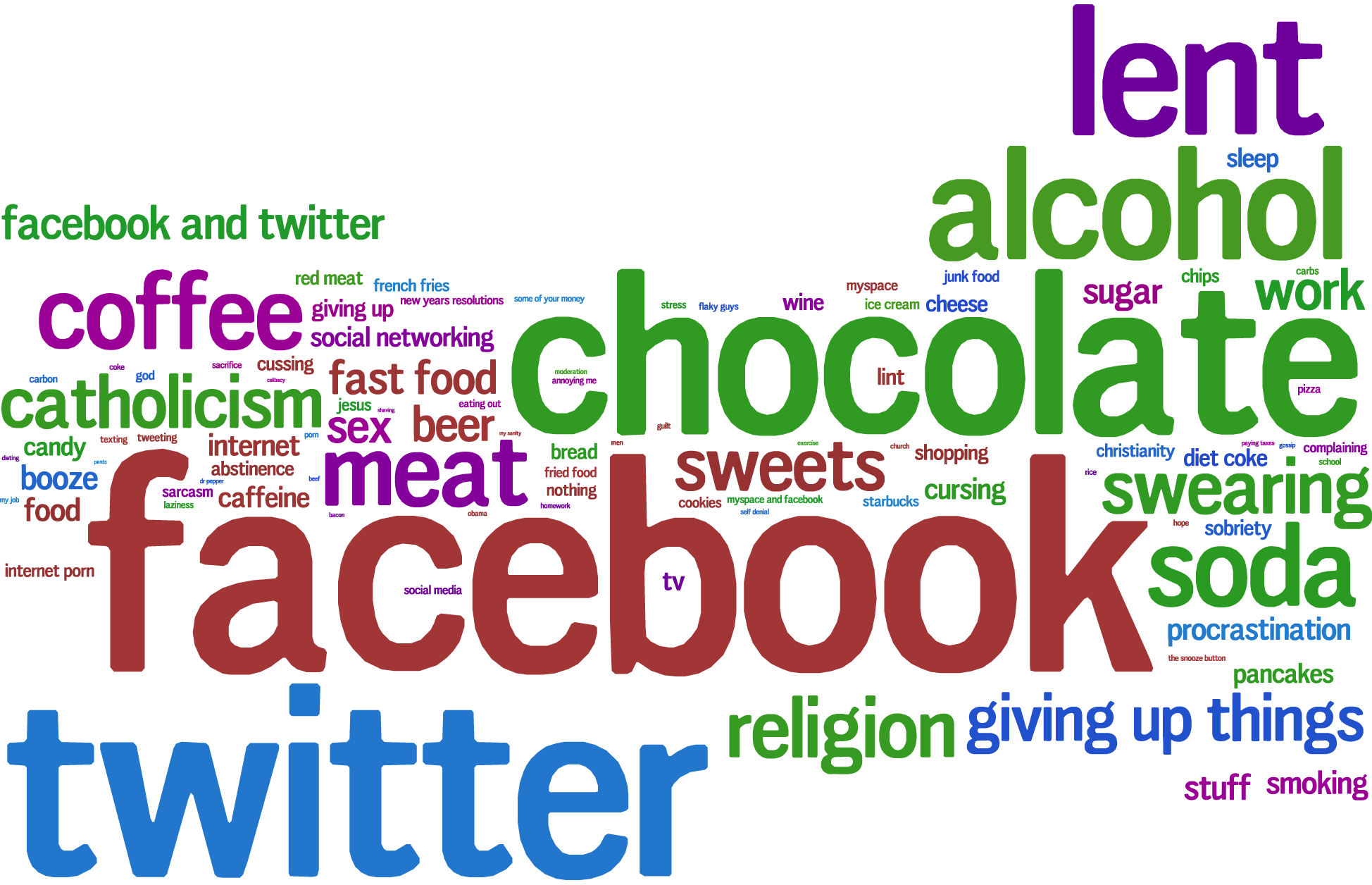
 As Lent begins, many of us “give something up” for the forty days (forty-six, actually, if you count the Sundays, which the Church traditionally does not) between Ash Wednesday and Easter. For long centuries, Christians have practiced Lenten fasts, abstaining from certain foods, and abstaining from food altogether on certain days. Contemporary Christians often give up sweets, chocolate, coffee, fried foods, and so on. 

But our culture is rife with harmful messages about body image; it tends to define our worth by our weight and attractiveness. In the midst of such a culture, Lent’s call to simplicity and austerity can sound an awful lot like one more message that we would be better people if we could just lose five pounds.  But the purpose of Lenten practices has nothing to do with our culture's claim that our worth comes from our physical appearance.

So I offer to you a few things I hope you will remember this Lent, and five ways you might choose to fast from our materialistic, body-obsessed, consumer-driven culture. 

  • You – including your body exactly as it is right now – are made in the image of God. All of humanity, in our many colors and ages and shapes and sizes, our beautiful diversity, reflects the Creator. Any cultural claim or critical comment that tells you to be ashamed of your body is not from God. 
  • Your body is a good gift from God. Don’t hate it. Give thanks for it. Make friends with it. Steward it well. Give it exercise and water and nourishing food and enough sleep. Take good care of it because it's healthy and feels good, not to try to conform to impossible cultural beauty standards. 
  • Food is a good gift from God. As the Psalmist says, “Taste and see that the Lord is good!” There are no inherently evil or inherently virtuous foods. God will not love you more if you eat more kale and less cheeseburgers. God gave us food – all food – for our nourishment. Besides, God already loves you. 
  • Lenten practices should draw us closer to God. So go ahead and give up chocolate, if you normally turn to it for emotional comfort you could draw from prayer or meditation. Give up coffee, if you fear you’ve made it a false idol. Give up fast food in solidarity with fast food workers. Take up exercise, if you feel called to better stewardship of the body God gave you. But remember, no matter what: you are made in the image of God. And you are loved beyond words, just as you are. 


The Fast I Choose” – Five Countercultural Ways to Fast 

  1. Fast from body-negative media: Mute the television during commercials.  Fast from websites and tv shows that focus on weight and image.  Stop reading body-negative magazines. 
  2. Fast from artificial sweeteners: Eat fruit. (Or real dessert with sugar in it!) Drink water. Sweet things are supposed to have calories. Our desire to satiate our sweet tooth without sacrificing our waistlines might come at great cost to our health. 
  3. Fast from unjust foods: This is basically impossible. But you might choose not to patronize restaurants that don’t pay a living wage. Or you might choose to abstain from factory-farmed meat. Or switch to some fair-trade products (even if paying more means consuming less). 
  4. Fast from mirrors: Again, basically impossible. But what better way to resist cultural messages that our worth is external? One account of a “mirror fast” is here
  5. Fast from disposables: Give up the paper cups, pizza boxes, and plastic take-out containers that deplete our earth’s resources and clog our landfills. Bring lunch from home. Take a reusable cup to the coffee shop.
For more about Lent, food justice, and body image, check out this sermon I gave a few years ago.

Holy One, we give you thanks for the many good gifts in our lives, and most of all for the gift of your love made known in Christ.  Bless us this Lent, that whatever fast we choose, it might draw us closer to you.  Amen.

Wednesday, September 12, 2012

The Flesh-Eating Gospel

Sermon on John 6:51-58

When I read this lesson, I groaned a little bit. And when I went online, I saw that I wasn’t alone. The facebook statuses and blog posts of my clergy friends reflected a shared sentiment: “The bread of life AGAIN?”

The readings we hear each week in church are generally not selected week-by-week by the pastors, but are based on a three-year cycle of readings called the Revised Common Lectionary. Each week has an assigned Gospel reading, an assigned epistle reading, and a couple of different options for Hebrew Scripture readings and Psalms. This year we are in the middle year of the cycle, Year B, and the summer of Year B has a certain reputation among preachers; week after week after week, we hear about bread: the Living Bread, the Bread of Life, the Bread of Heaven, the loaves and fishes.

This Sunday, we once again hear Jesus describing himself as bread. But today’s reading is a little different. Jesus starts out again talking about himself as living bread, but quickly transitions to inviting his listeners to eat his flesh and drink his blood, causing some of my less reverent clergy friends to refer to this week in the summer of bread of life readings as “Zombie-vampire-Jesus week.”

“The bread that I will give for the life of the world… IS MY FLESH.” Zombie vampire Jesus indeed.

Our culture is rather obsessed with zombies and vampires. From Buffy to True Blood to Twilight, George Romero movies to the AMC series “The Walking Dead,” we can’t seem to get enough of these creatures that are human-but-not-quite, feasting on the flesh and blood of the living. So when Jesus seems to invite us to go vampiric on the Son of Man, it feels a little uncomfortable. Our worlds are colliding, as the blessed savior’s words evoke entertainment we think of as scintillating, self-indulgent, and perhaps even irreligious. As I first read this passage, my first instinct was to dismiss the similarities, to try to banish those zombie-vampire overtones from my mind and read it from a purer, more spiritual place.

I’m not alone in that: the great reformer Martin Luther stated emphatically that it surely could not be meant in a literal sense. He goes on to say that the sort of flesh that Jesus invites us to eat is not “the sort of flesh from which red sausages are made,” “not flesh such as purchased in a butcher shop or is devoured by wolves and dogs.” Martin Luther rejects the “fleshiness” of the text, and of course he is right that the text is not a literal invitation to cannibalism.

Another option, which Martin Luther also rejects, is that this passage refers to the sacrament of communion. Many commentators turn toward this option: the bread which we bless and break and declare to one another, “this is the Body of Christ.” The wine which we sip or dip bread into, saying sometimes “the cup of blessing,” but sometimes “the blood of Christ, poured out for you.” Communion is mysterious, and it is sometimes puzzling, and there are different ways of thinking theologically about it, but for those of us who are accustomed to it as an old and familiar ritual, it is not creepy. When we hear this lesson as a foreshadowing of the last supper and the crucifixion, a teaching about communion, it isn’t creepy either.

But what if those creepy resonances between this passage and stories of zombies and vampires are more than coincidence? What if Jesus is intentionally tapping into some of the same deep fascinations and fears, the same taboos and terrors, that horror stories play upon?

After all, it is pretty clear that Jesus’ teaching is disconcerting and upsetting to the listening crowd. “How can this man give us his flesh to eat?” they ask. Even the disciples, a couple of verses after the end of the reading we heard today, tell Jesus he’s on thin ice: “This teaching is difficult,” they say, “Who can accept it?” If we try to reinterpret this teaching so it is not difficult, if we try to find an easy way to hear it so we can accept it without struggle, perhaps we’ve missed the point.

Commentator William Willimon in the Feasting on the Word commentary notes that throughout the passage, Jesus moves from polite words about eating and drinking to ruder words that are more explicitly anatomical, words more aptly translated as “gulp down my flesh,” or “slurp my blood.” Jesus calls attention to the messy reality of eating, the fact that, when we eat, we mash up formerly living things between our teeth, moisten them with our saliva, swallow them into our guts. We can try to dress it up with white tablecloths and pretty plates and proper etiquette; we can chew with our mouths closed and keep our elbows off the table, but eating, at its heart, involves a lot of bodily processes that make many of us a little squeamish when we give them our full attention. When we pay attention to eating, we remember that we are living things, with bodies: muscle and fat, bones and connective tissue, nervous system, skin, nails. Bodies that are different, but not so very different, from the bodies that once made up our hamburgers or pork chops (for those of us who are not vegetarian). Giving our full attention to the processes of eating and drinking calls attention to our own mortality, our own fragility. In this passage, Jesus calls us to give them our full attention nonetheless. Because, as the grand statement at the beginning of John reminds us, in Jesus, the Word was made flesh.

The Word made flesh means that all of the nitty-gritty embarrassing details of having a body have been in-dwelt by divinity. The Word made flesh means that God created every intricate and repulsive detail, from an infant’s tiny curling toes and almost translucent toenails, to dandruff and acne, to aching joints and sore muscles, to the electrical impulses of nervous systems, to liver spots and graying hair. The Word made flesh means that through Jesus Christ, God has dwelt among us in a particular body, experiencing the mundane joys and irritations of physicality. The Word made flesh and dwelt among us, shattering every barrier between that which is physical and that which is spiritual.

In his book Accompany them with Singing, Thomas Long writes about the history and traditions of Christian funerals. Long notes that to the Greco-Roman worldview saw the spiritual and material worlds as completely separate; the prevailing culture surrounding the early church celebrated things related to spirit and intellect and condemned things related to physicality and fleshiness. Early Christians, however, saw an intricate and holy connection between spirit and flesh. Long writes about the ways early Christians puzzled Romans with ideas like the doctrine of the incarnation, and practices like communion, reflecting Christian theology that the spiritual and the physical were not separate spheres, but a unified creation. “The most bizarre of these activities, as far as the Romans were concerned,” Long continues, “was the Christian practice of burying the dead – not just their own dead, but the poor as well.” The early Christians, Long says, gave their time to help bury the poor, a practice their Roman peers found repugnant. They gathered up the bones of martyrs and made relics out of them. They treated dead bodies not as empty shells to be abandoned, but as created things to be disposed of with care. There were other practices, too, stemming from this theology: Diana Butler Bass writes that early Christians were also known for caring for the sick. When an epidemic took hold, she writes, most people who could would flee the city; but Christians stayed and cared for the ailing. They believed that the Word was made flesh; they believed that the resurrection means we need not fear death; they believed that caring for the ignored and despised is a high and holy calling. And they believed that they were nourished and sustained in these acts of service by Christ – whose flesh is true food.

Those beliefs are as counter-cultural today as they were two thousand years ago, although we live in a very different culture than that of the early church. And the call to take seriously the incarnation is as pressing and as counter-cultural today as it was two thousand years ago. Taking seriously the incarnation means working and hoping for justice and peace in the flesh, in the world. Not only spiritual peace in the hearts of the faithful while wars rage and gun violence escalates, but peace in the world. Not only justice by-and-by in the realm of God, but justice now, in this world, for living people: fair pay for a day’s work, access to resources and opportunities, and a government that serves the common good. If Jesus is the Word made flesh, living bread for the life of the world, then God’s call to us, this Body of Christ which we call the church, is to incarnate God’s will. To work and hope and pray for justice and kindness and peace and grace that is tangible; visible; incarnate.

“My flesh is true food and my blood is true drink,” Jesus says. In the creation of human bodies, in the incarnation, the Word made flesh, God enters into all of embodiment. Not just the parts of the human experience that are polite and pretty, not just the parts that are joyful and romantic. The messy parts and the icky parts and the parts that we don’t talk about in polite company.

“My flesh is true food and my blood is true drink,” Jesus says. He invites us to a faith that happens not just in our internal reflections, but with our hands and feet and voices. It is not always sunshine and roses when we visit a friend in the hospital. There are bed pans and hospital johnnys. It is not always easy to sit down and eat with someone we don’t know well. There are awkward silences and moments of conflict. When you embrace someone while they cry, you sometimes end up with snot on your shirt. That is what it means when God invites us to the messy and ugly business, the high and holy calling, of really caring for our neighbors, being part of the Body of Christ, the church, incarnating God’s love for the world.

“My flesh is true food and my blood is true drink,” Jesus says. It sounds creepy, and maybe it is. But it is necessary. Because we who are fed by this living bread have a high and holy calling: to love God and our neighbor; to do justice and love kindness. And in that hard work, we are truly nourished and sustained by Jesus Christ – not always tangibly, but truly. We could not do it if we were merely metaphorically sustained by God. We could not do it if Christ loved us abstractly. We can do it only because we are fed by the Body of Christ – the Body of Christ which we know truly, though not always tangibly, through scripture and prayer and community – nourishing and sustaining each of us. And for that real sustenance, thanks be to God. Amen.

Friday, June 15, 2012

Passing the Peace & Christ's Ministry of Physical Touch

Have you ever thought about the word “incarnation”? Our Christian tradition teaches that Jesus Christ was God incarnate, God coming to us in this world, in a body. The roots of the word “incarnation” highlight the sheer physicality of this miracle: the word “incarnation” comes from the Latin word caro, which means flesh. The word “incarnation” is related to the words “carnage” and “carne” (as in chili con carne – “with meat”!)


The word “incarnation” asserts that Jesus really, truly had a body, experiencing all of the joys and nitty-gritty realities that we know come with being embodied people. A workshop I attended recently at a conference for UCC clergy in their 20s and 30s highlighted one aspect of Jesus’ incarnation: his ministry of physical touch. We focused on the many stories of physical touch in the Gospel stories of Jesus’ life. Sometimes he touches people for healing: in one story he heals the eyes of a blind man by making mud out of dirt and saliva, and applying it to the man’s eyes! Other stories show Jesus communicating love through touch: stories of washing the disciples’ feet, or placing a child on his knee. A third kind of story shows Jesus being touched by others, such as the woman who anoints him in Bethany. 


Many Christian worship services contain a moment where we celebrate the ministry of physical touch: we call it the Passing of the Peace. In my congregation, the passing of the peace is an extended affair; we make time for one another, smiling and greeting and rejoicing as we make our way up and down the aisles. It is a moment of joy in community, and it is our own way of celebrating the ministry of physical touch as we embrace, shake hands, pat shoulders, and sometimes even kiss cheeks. 


Of course, harmful physical touch is widespread in our contemporary world, and the Gospels also tell negative stories of physical touch: Judas’ kiss is a gesture that communicates not love, but betrayal. As we pass the peace, it is important to remember that some people may not wish to be touched because of past experiences of harm. There is another story of a woman who touches the hem of Jesus’ garment for healing, and the scripture says he “feels the power go out of him.” For those who are shy or introverted, sometimes physical touch can be exhausting rather than invigorating. As we pass the peace, we can respect each other’s differences by paying attention to see who wishes to embrace, and who would prefer to shake hands. 


One of Paul’s letters instructs the early Christians to “greet one another with a holy kiss” (Rom. 16:16). When we pass the peace with one another, we participate in this tradition of Christian love and community expressed incarnationally -- in the flesh. Furthermore, we celebrate that we are empowered to extend love and peace on Christ’s behalf, remembering that we are members of the Body of Christ!