Showing posts with label fear. Show all posts

Sunday, December 29, 2013

Fear Not!

A Sermon on Luke 2:8-20

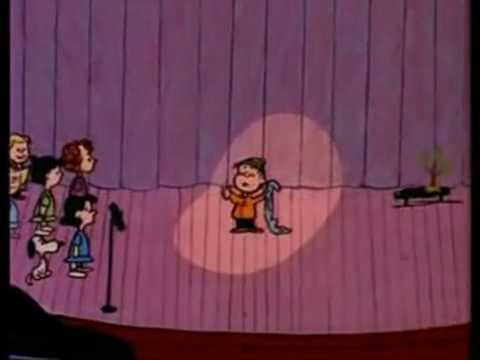
Shortly before Christmas, a few members of my congregation gathered in the church basement to watch and discuss A Charlie Brown Christmas. If you haven’t seen it before, you should – it’s well worth your twenty-six minutes. The classic television special which has been broadcast every year since 1965 focuses on Charlie Brown’s holiday blues and his search for meaning and joy in the midst of the season’s commericialism, competitiveness, and distractions. In one scene, the glum little boy sits down at Lucy’s five-cent psychiatric help stand. Charlie Brown explains his feelings of depression, and Lucy begins to reel off a list of possible diagnoses, until finally she suggests that Charlie Brown may have “pantophobia, the fear of everything,” and Charlie responds with a cry of “That’s it!” so loud it knocks Lucy over.

But, contrary to Lucy’s claim, this five-cent diagnosis doesn’t solve Charlie Brown’s problems; neither does trying to direct the Christmas pageant; neither does buying a little Christmas tree that all the other children find sorely lacking. Finally, an exasperated Charlie Brown exclaims, “Can’t anyone tell me what Christmas is all about?” “Sure, Charlie Brown,” replies little Linus, “I can tell you what Christmas is all about,” and in one of the loveliest moments ever animated, he stands in the center of the pageant stage, and recites from the King James Version the same passage we heard during today’s Gospel reading:
And there were in the same country shepherds abiding in the field, keeping watch over their flock by night. And lo, the angel of the Lord came upon them, and the glory of the Lord shone round about them: and they were sore afraid. And the angel said unto them, 'Fear not: for behold, I bring unto you good tidings of great joy, which shall be to all people. For unto you is born this day in the City of David a Savior, which is Christ the Lord. And this shall be a sign unto you; Ye shall find the babe wrapped in swaddling clothes, lying in a manger.' And suddenly there was with the angel a multitude of the heavenly host, praising God, and saying, 'Glory to God in the highest, and on earth peace, good will toward men.' 
Throughout the entire Christmas story, every dialogue between angels and humans opens with the same words: fear not. The angels who appear to the shepherds, like the angel who appears to Mary, and the angel who appears to Zechariah, and even the angel who appears to Joseph in the Gospel of Matthew, all greet people with the words “Do not be afraid,” or as in the King James Version that Linus quotes, “Fear not.” I’ve always assumed that it must be terrifying to see an angel – after all, the only description of angels that appears in the Bible describes them as fiery six-winged beings.

But listening to Linus tell the story of the angels appearing to the shepherds with the words “fear not,” I couldn’t help but remember Charlie Brown’s earlier diagnosis of “pantophobia – the fear of everything.” Perhaps the reason for the angelic greeting, “fear not,” is not that angels are fearsome creatures, but rather that humans are fearful creatures. Perhaps the words “fear not” are not intended only for the shepherds, quaking in fear at the awe-inducing sight of God’s messengers, but also for all of us.

We humans often live in a state of fear. We live with all kinds of fears. Some of us fear losing a job, or that we will never find a job, or that we will be stuck forever in a job we hate. Some fear that there won’t be enough money to meet our needs. Some fear the end of a relationship, or that we will never find the right relationship. Many of us fear illness, injury, and death – our own, or that of a loved one. In one way, these fears are legitimate – the things we fear are real and painful. But it is also true that fear can run rampant in our lives, sapping our energy, driving our decision-making, and undermining our joy.

I’m a new mom – my baby boy was born in May. And as I’ve become a new parent, I’ve noticed the new part that fear plays in my life. Sometimes fear keeps my baby safe – I cross the street more cautiously, lock up the cleaning chemicals, and keep an eye out for choking hazards. Other times, fear plays a more insidious role. New moms are constantly bombarded with advice and warnings: don’t overdress him! Don’t underdress him! Make sure he gets plenty of sleep or his brain won’t develop correctly! Don’t let him sleep on his tummy or he might stop breathing! Keep him away from cell phones! And anything that might have germs on it (which is everything)! And plastics! And non-organic foods! As soon as he was born, people started warning me about all of the things I should be afraid of, and companies started trying to sell me products to protect my helpless little baby from dangers real and imagined. Disaster seemed to lurk around every corner.

Fear can be an all-consuming emotion, multiplying and amplifying itself. It can crowd out everything else: joy, satisfaction, contentment, trust. It can shout down the trustworthy voices of loved ones and parental instincts and the still, small voice that whispers the love of God. When my son was a newborn, I would gaze at that tiny, fragile little boy in my arms and hold my breath and worry, and worry, and worry about all of the things I needed to do to protect him from harm, and all the harm that might come to him despite my best efforts.

After the shooting at Sandy Hook elementary school last year, President Obama shared a quote by Elizabeth Stone, who said that to have a child is “to decide forever to have your heart go walking around outside your body.” As a new mom, I felt that keenly; I was freshly and intensely aware that there is much to fear in this world, for each of us.

But the angels come, over and over again, saying those words: fear not. Not because the things we fear are not real, but because the good news of God’s love is greater than all that we fear. Because, in Jesus Christ, God has come into the world to share in all of human life: our fears, and our hurts, and our joys. In Jesus Christ, God knows what it is endure pain and sorrow. In Jesus Christ, God knows what it is to share bread and wine and laughter. In Jesus Christ, God knows what it is to be scorned and rejected. And through Jesus Christ, God knows what it is to send a little baby into a world that is sometimes dark and dangerous and hurtful and hateful, but is also brimming with beauty and sweetness and goodness.

God knows that there is much to fear, and God comes to us anyway, and God sends us messengers who tell us, “fear not.” Because in Jesus Christ, God enters into every dark and dangerous place of human life, bringing light and truth and love.

God’s love took on flesh, and God held her breath and gazed at that tiny, fragile little baby, born in a barn, hunted by a powerful king, bringing light and love into a world that would reject him and harm him and crucify him. And although there was much to fear, God’s light shone in the darkness, and the darkness did not overcome it.

So fear not, brothers and sisters. Fear not.

Amen.

Monday, June 25, 2012

Epitychiphobia

Sermon on Mark 4:35-41

Phalacrophobia: the irrational fear of becoming bald.
Gelotophobia: the irrational fear of being laughed at.
Ablutophobia: the irrational fear of bathing.

Perhaps you’ve seen lists of strange phobias like those. You might also be familiar with the more common phobias: arachnophobia (spiders), acrophobia (heights), claustrophobia (enclosed spaces). Fear – both rational and irrational – is a huge part of the human experience. We struggle with it, come up with silly names for it, even make film after film after film about it.
Fear is an overpowering emotion, an emotion that takes hold of us and makes it hard for us to think clearly, breathe deeply, and act rationally. Perhaps that is one of the reasons that in our scripture, angels so often greet humans with the words “Fear not!”

Fear plays a big role in our Gospel text for today. Although our story today is not a parable – it is a story about Jesus, not a story that Jesus told – it reminds me of my colleague’s words from last week about parables: they are multi-layered, multi-dimensional stories, with many possible meanings and layers of interpretation that can all be true at the same time. As I studied today’s text, I started to see several layers to this story of the storm at sea, layers focused around the fear of the disciples: what are they afraid of? I’d like to suggest to you three phobias, and with them three interpretations, all of which might be true, although the last is my favorite.

The first phobia I would like to suggest to you is thalassophobia: the fear of the sea. The beginning of our story finds Jesus and the disciples at the end of a long day of preaching and teaching. The crowd is so eager to be near Jesus that he has gotten into a boat, sitting there and teaching the crowd on land to prevent them from crushing him. The day is over, and Jesus calls on the disciples to go with him across the sea of Galilee (which is actually a large-ish lake in the northern part of Israel).

They set out in the boat, but a great windstorm arises – the words there actually mean “a great whirlwind of wind.” The waves batter the boat so that the boat “is already being filled up,” the Greek says. The story is mostly in the present tense, which isn’t unusual for Mark, but the narrator adds immediacy with the word “already.” And through all of this, Jesus is asleep in the back of the boat, with his head on a pillow, until the disciples wake him up in a total panic, with these words: “Teacher, do you not care that we are perishing?”

The direct cause of their fear is the storm, but that fear is heightened by the way the sea was perceived in their culture. For ancient Israelites, water was a place of swirling primordial chaos. Think of the image of the Leviathan, the mysterious beast lurking in the depths of the sea, that we hear of in the Psalms. Think of the formless void of waters that exists before God institutes order, creating light and darkness, sea and dry land, in the Genesis account of creation. Think of the parting of the Red Sea, and the parting of the Jordan River, God’s miraculous acts of pushing water back to make a path of safe dry land so the Israelites can cross over. A storm is bad; a storm at sea is terrifying.

The most straight-forward interpretation of the disciples’ fear, then, is that they fear the storm at sea, as we all fear storms in our lives, whether they are literal storms like the one that came raging through the city on Friday, or metaphorical storms of financial trouble, or family crises, or health issues. When we fear storms, perhaps this story can remind us that Christ has the power to still storms, commanding “Peace! Be still!” to the storms of anxiety and hopelessness and fear that rage in our hearts in times of trouble.

So that is one phobia, and one layer, but maybe you’ve noticed something: after the storm stops, the disciples remain afraid; so I’d like to suggest a second possible layer of interpretation.

Perhaps the disciples are suffering from exousiphobia: the fear of power or authority, specifically the authority that they come to realize Jesus has over the elements. Having been woken up in the midst of the storm, Jesus rebukes the wind and says two words to the sea – words that are translated in our Bible as “Peace! Be still!” but might be more aptly rendered as “Shut up! Shut up!” The storm stops.

I very much doubt that that is what the disciples were expecting; perhaps they wanted him to grab a bucket and start bailing, or to help with the oars. Maybe they were turning to him because it was his stupid idea to get in this boat in the first place. I doubt that they realized that they were in a boat with one who had the authority to control the weather. The Greek word used for storm in this passage is “lailaps,” which can mean whirlwind; the Greek translation of Job uses that same word when God speaks to Job out of the whirlwind, the passage we heard just a little while ago. It is a passage that evokes the overwhelming power of God, reminding us that the all of the vastness and mystery of the universe comes directly from God’s hand. It is one thing to be in a boat in a storm at sea; it is another thing to be in a boat with one who has power to control the storm. They think they’re in a boat with mild-mannered Bruce Banner, only to find themselves with the Hulk. They start to realize the scope of Christ’s power, and they are frightened by what they see.

Perhaps sometimes we, too, underestimate Christ’s power to redeem, transform, and save. Commentator Mike Baughman invites us to consider whether, like the disciples, we sometimes ask God only for things that seem realistic. Do we shy away from praying and hoping for real peace and justice for this world? Do we sometimes ask for just a little bit of healing, just a modicum of reconciliation? Do we hand Jesus a bucket instead of asking him to still the storm?

Perhaps we do, sometimes. But I think there is more going on here, and so I would like to suggest a third phobia, a third interpretation. Perhaps the disciples are suffering from epitychiphobia: the fear of success. You see, Jesus has actually proposed a pretty outrageous plan; they have gotten into a boat in the Galilee, and Jesus has declared that the boat is heading for the other side: the land of the Gerasenes. These are not particularly hated people, like the Samaritans; they are not people who are really on the radar. They are Gentiles, and they are Gentiles from way over there. Perhaps when the disciples see Jesus still the storm, they suddenly realize the scope of what God was about to do; this is not some oddball itinerant preacher heading off on a crazy quest. This is the Messiah, heading out to minister to Gentiles, and they are going with him. It is a fundamental change in everything they thought they knew about God and how God works in the world, and maybe that scares them.

They would not be the first; the text hints at another story of God reaching out to Gentiles, another story of a storm at sea: the book of Jonah. Like Jonah, this story involves a word from God, brought to non-Israelites by Israelites. Like Jonah, this story involves a man asleep in a boat. Like Jonah, this story involves a storm at sea.

There is a more subtle connection, as well: when our translation says that the disciples were “filled with great awe,” what the Greek actually says is that they “feared a great fear,” using both the verb and noun forms of “phobia.” First of all, “filled with great awe” is not a very good translation of that phrase. But second and more important, “fearing a fear” or “rejoicing a joy” or “lamenting a lament” is weird syntax in Greek; it’s not how people talked. But it’s not uncommon in Hebrew, and it is downright characteristic of the book of Jonah. If we know how to listen for it, the narrator is evoking a story of a man reluctant to participate in the vastness of God’s love. He references that story as he tells us this story of the boat bound for the land of the Gerasenes, carrying the love of God incarnate and a dozen men who are just starting to realize what they’ve signed up for.

So perhaps, when the disciples “fear a great fear,” their fear is the fear of success: they fear that they are really, actually, going to go and bring the Good News to the Gerasenes. They fear that the man they are following is truly the Christ, and the radical plan he has proposed is actually going to happen, and they don’t know what that means for them. They don’t know what it means for their lives or their families, they just know it will turn their worlds upside down -- and it will. They fear the unknown that lies on the other side of transformation. The text tells us they are frightened not when the storm comes, but when they find themselves in a boat riding over calmed waters toward a foreign land with Jesus Christ.

Sometimes perhaps we feel that way as well. I think there are times when we are afraid of the storms of life, but more afraid of the strange and uncomfortable places God might be asking us to go when the storms subside. Change, after all, can be disorienting and terrifying. It can be more frightening than the storms of rush and hurry, busy-ness and workaholism. More frightening than the storms of our familiar anxieties and habitual neuroses. More frightening than the dysfunctional way we’ve always done things, more frightening than the job that makes us exhausted and bored, more frightening than the relationship that brings out the worst in us. Change is certainly more frightening than the swirling storms of things that are urgent, but not important.

So let me suggest a question for us as individuals, and for us as a community: what would we be afraid of if the waves settled and the wind calmed? What land, what work, what mission is there on the other side of the sea, far away from the familiar, that would cause us to fear a great fear, a fear of transformation, a fear of God doing a new thing, a fear of success? Because perhaps, friends, that is where God is leading us.  

May we have the courage to follow. Amen.